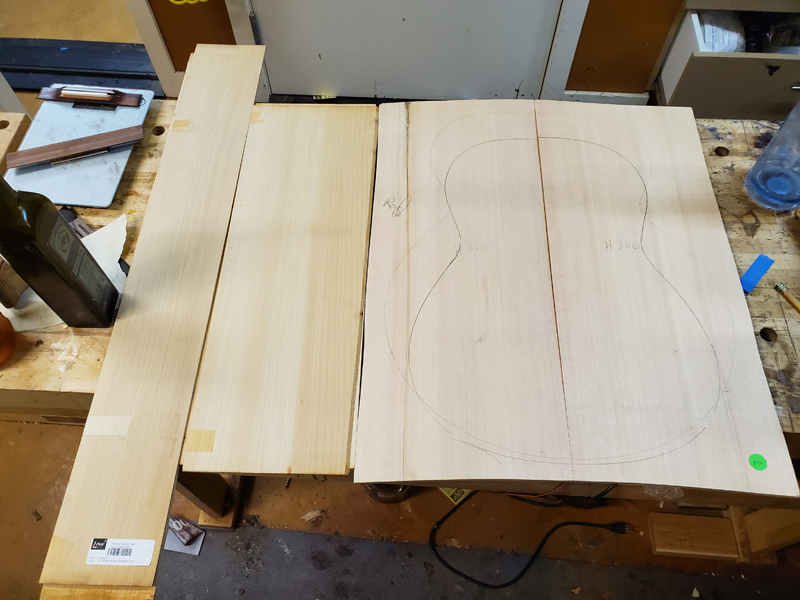
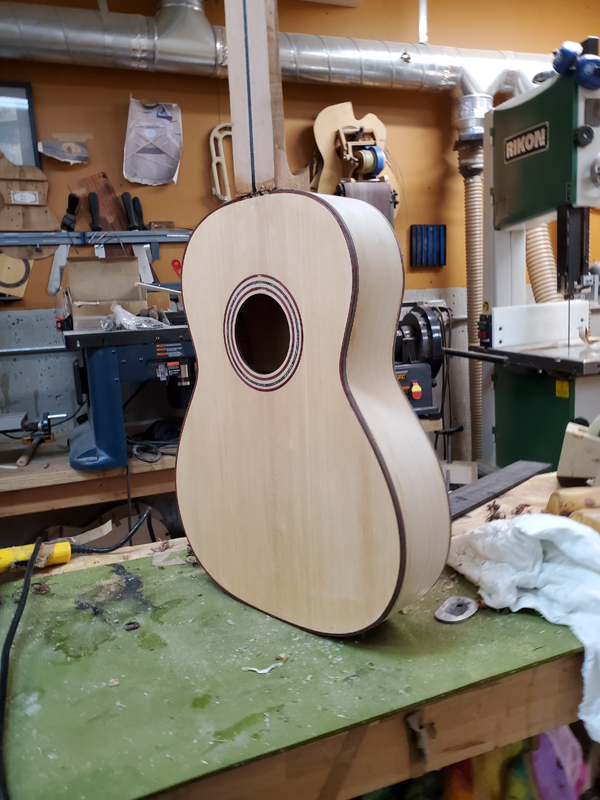
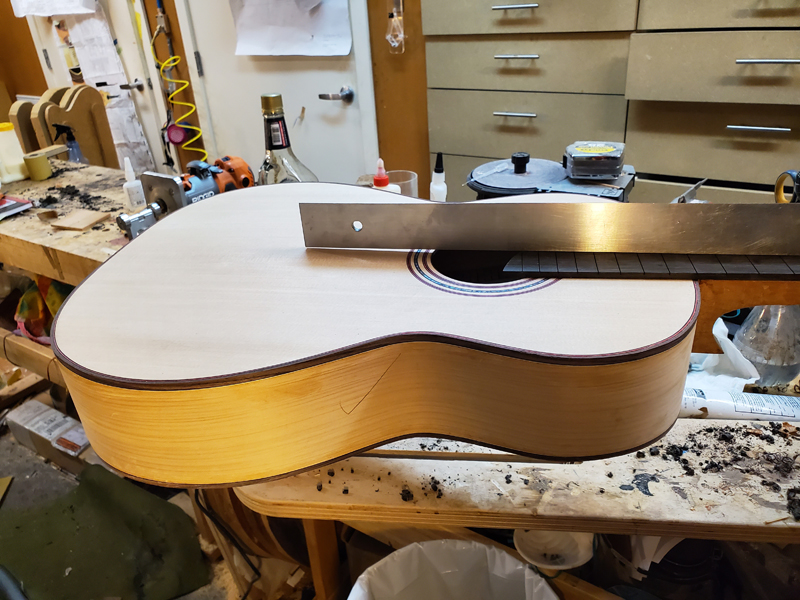
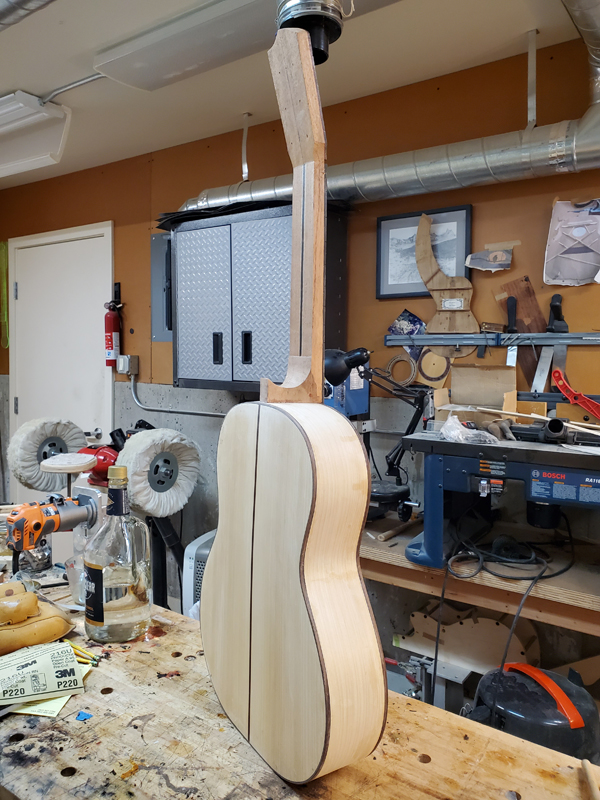
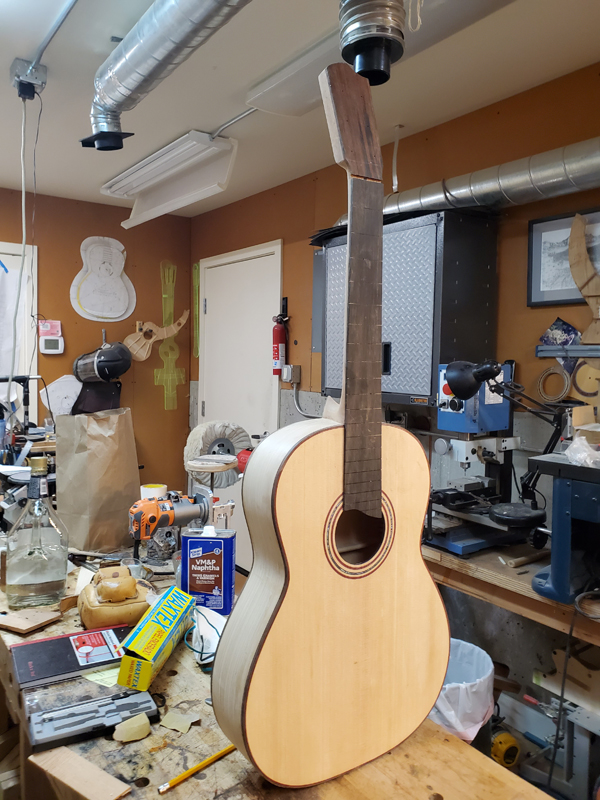
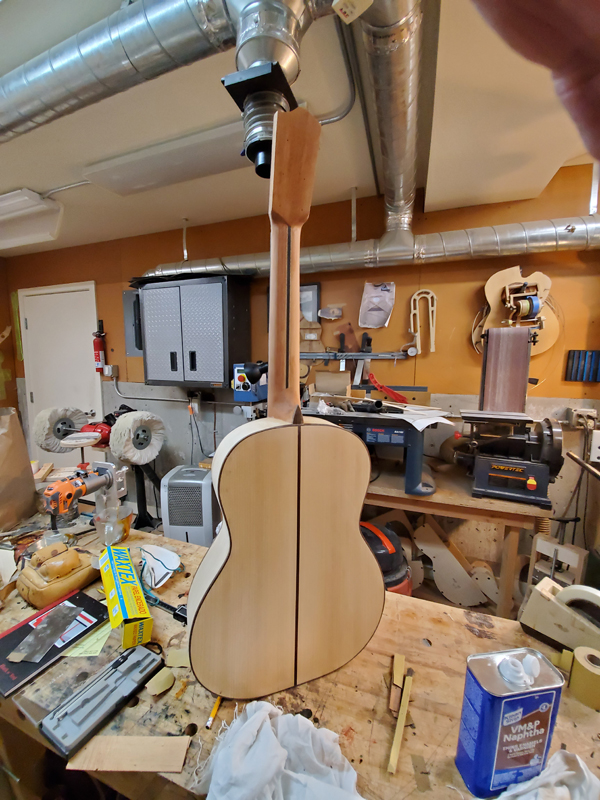
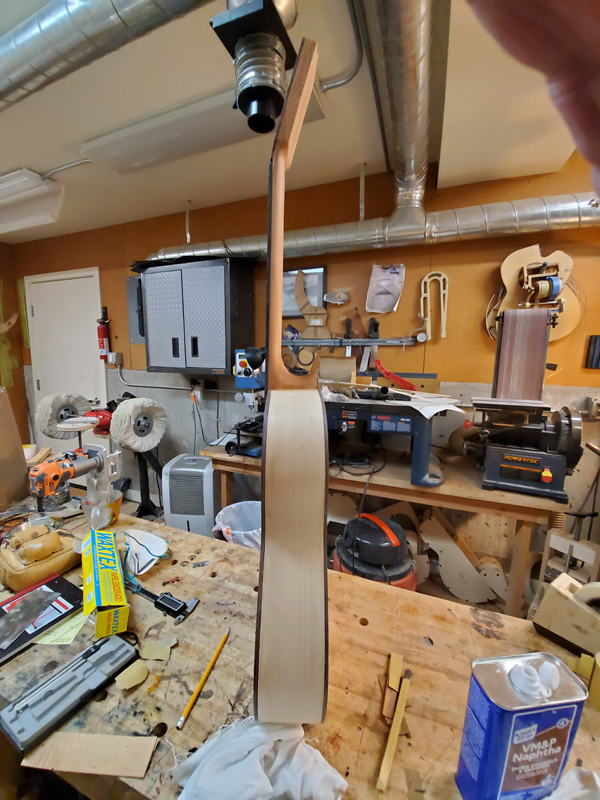
I am nearly finished with my first flamenco guitar. The flamenco has been a long time coming — this Spanish Cypress set was the third guitar set I bought, many years back. I have suspended most of my knowledge on how to build a guitar and have been following Paco Chorobo’s online flamenco class through O’Brien Guitars. The class runs about 22 hours and includes full plans for the guitar, solera, and templates.
The course is nicely detailed, and besides learning how to build this guitar I picked up some woodworking techniques I didn’t have. Sometimes watching how they use their tools is just as valuable as what’s being taught in that section.
I’ve taken pictures throughout the build but have been slow starting this blog. I’ll mostly focus on new techniques and changes to my build style, but I’ll include plenty of pictures of all the steps.
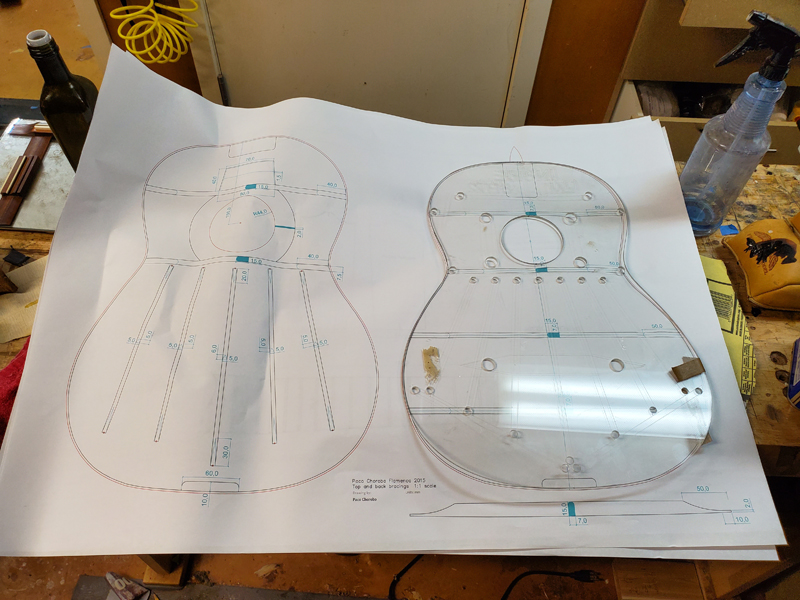
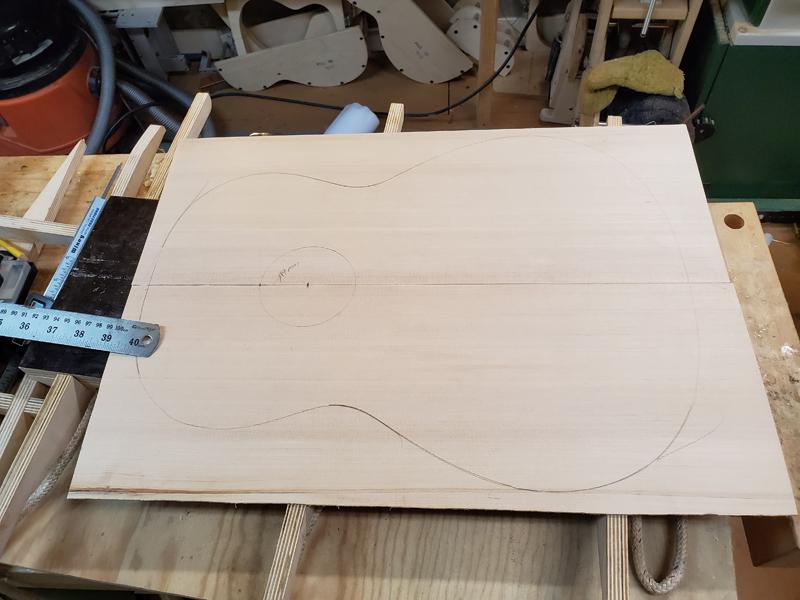
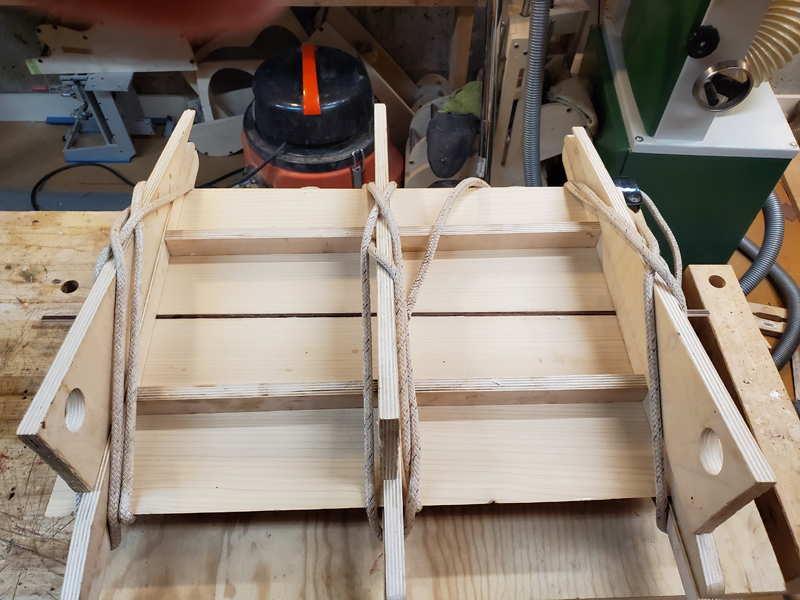
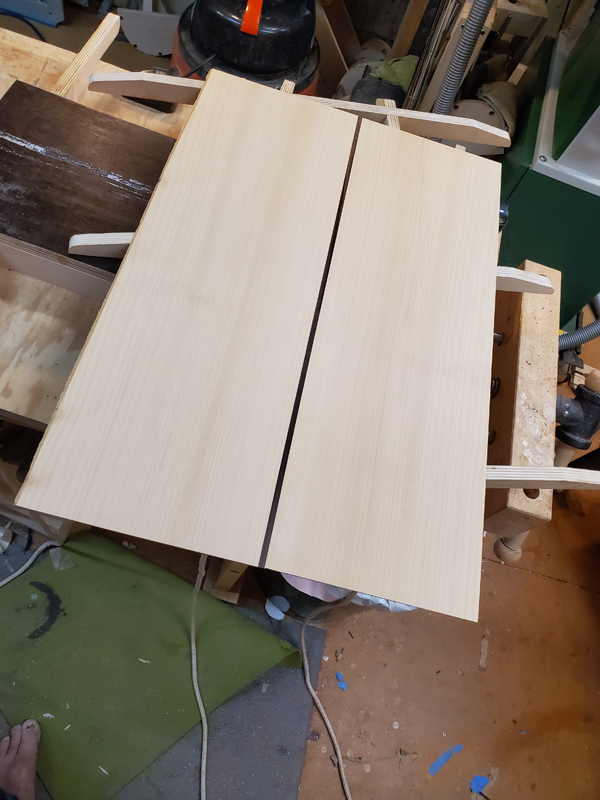
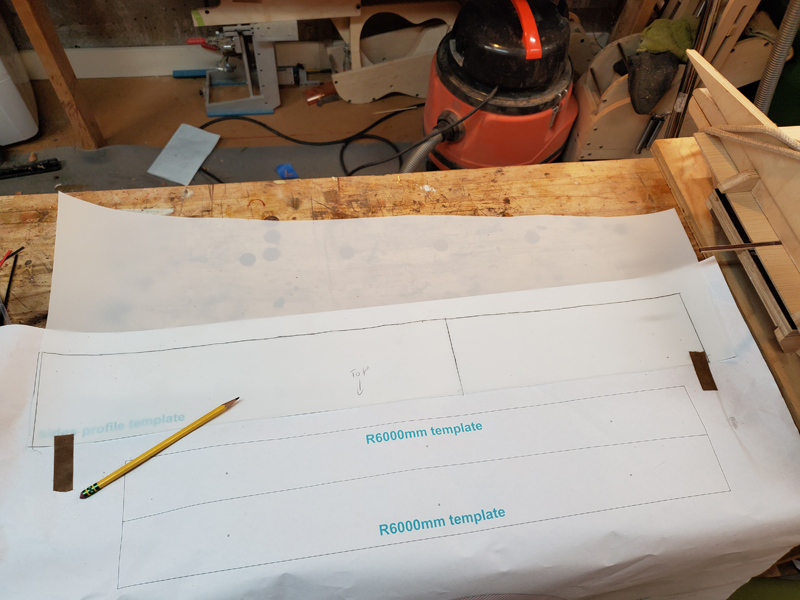
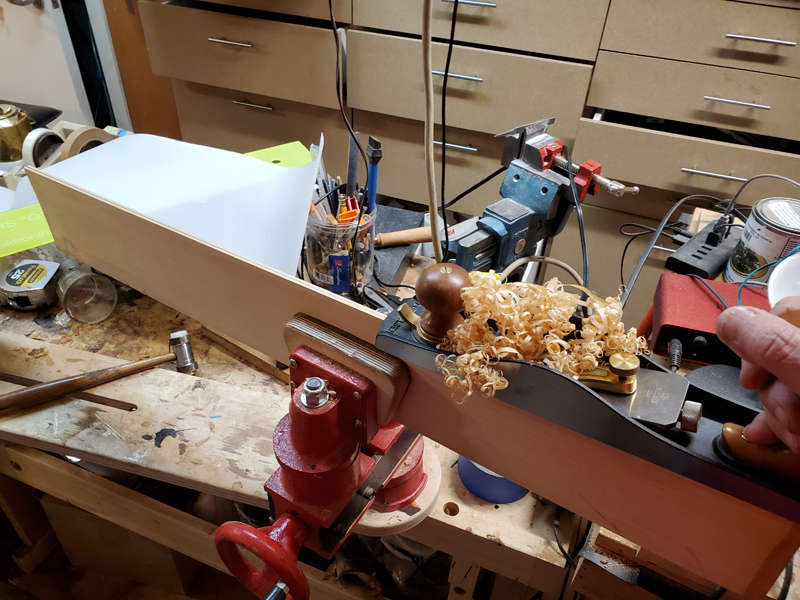
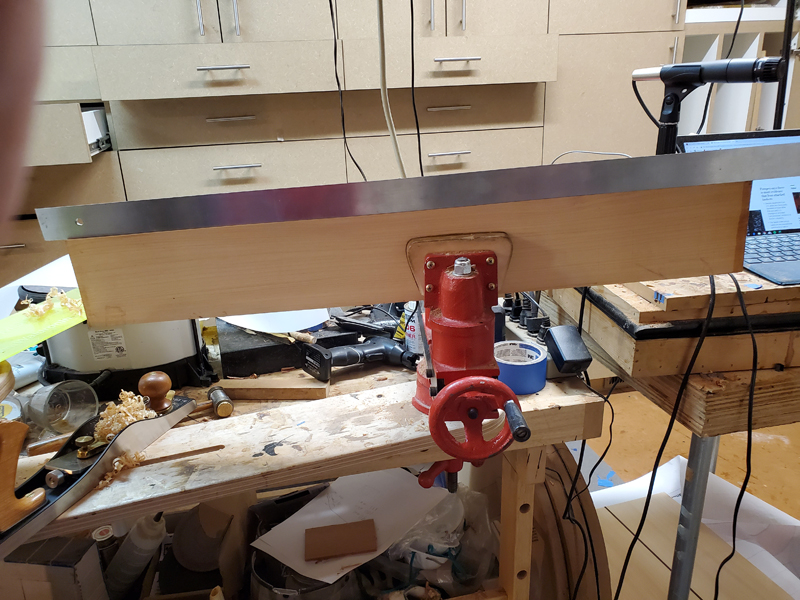
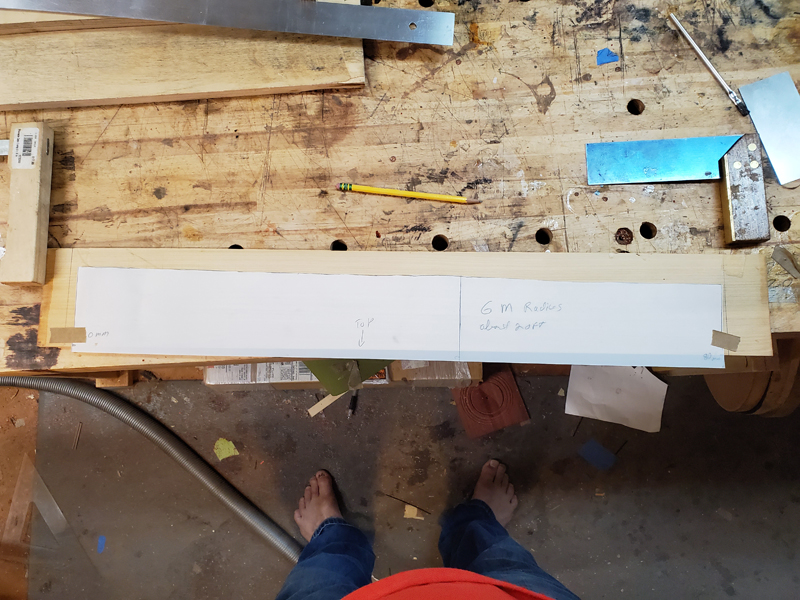
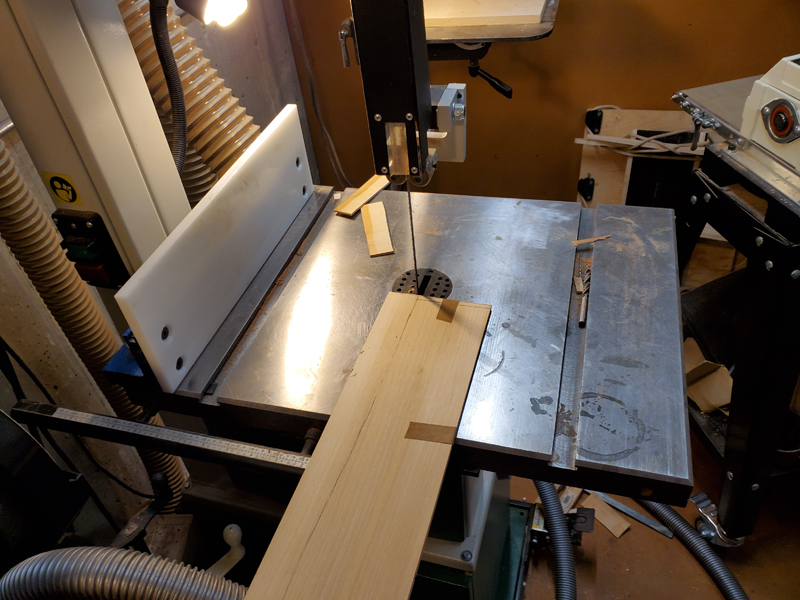
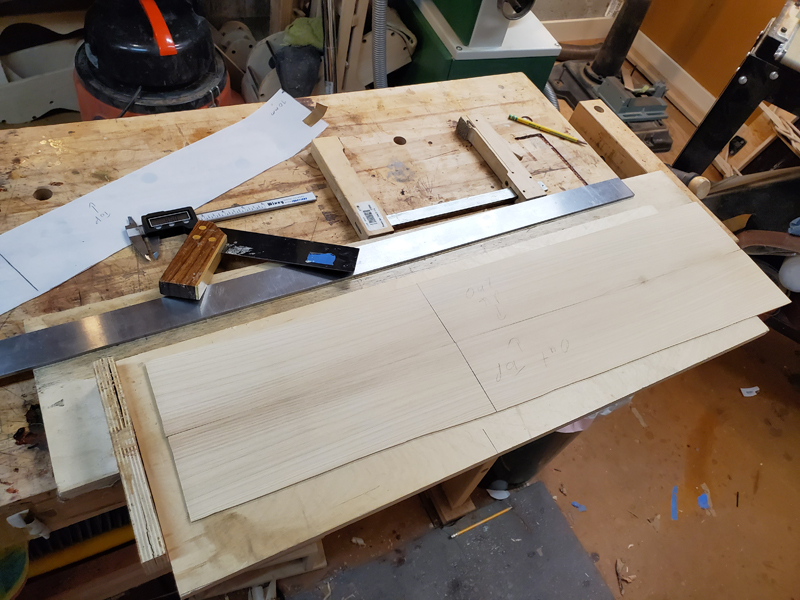
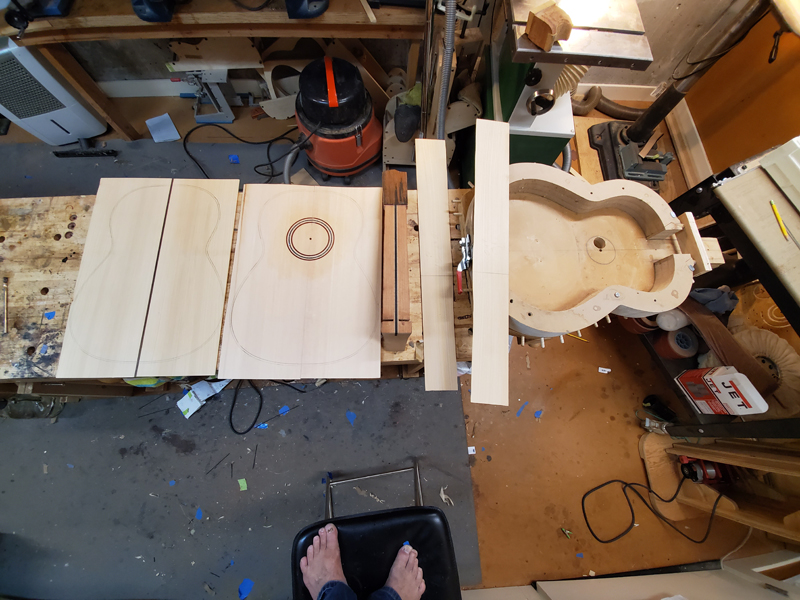
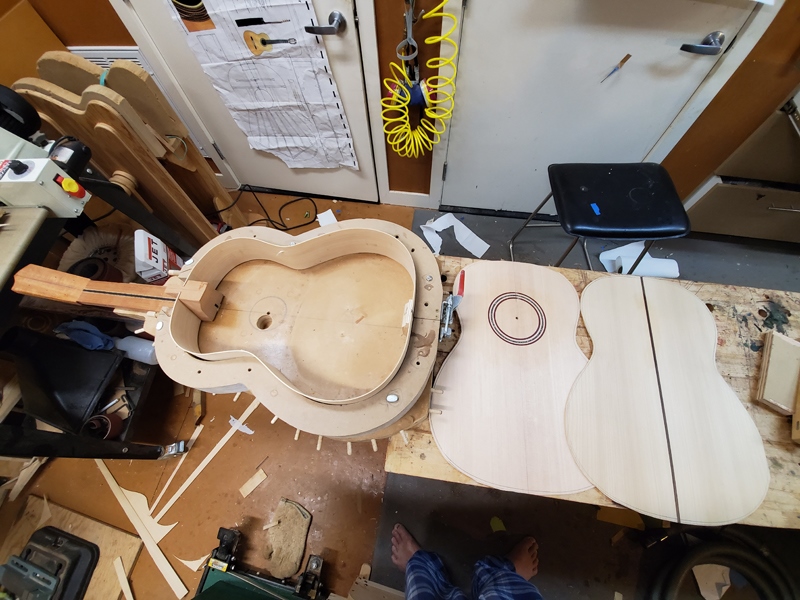
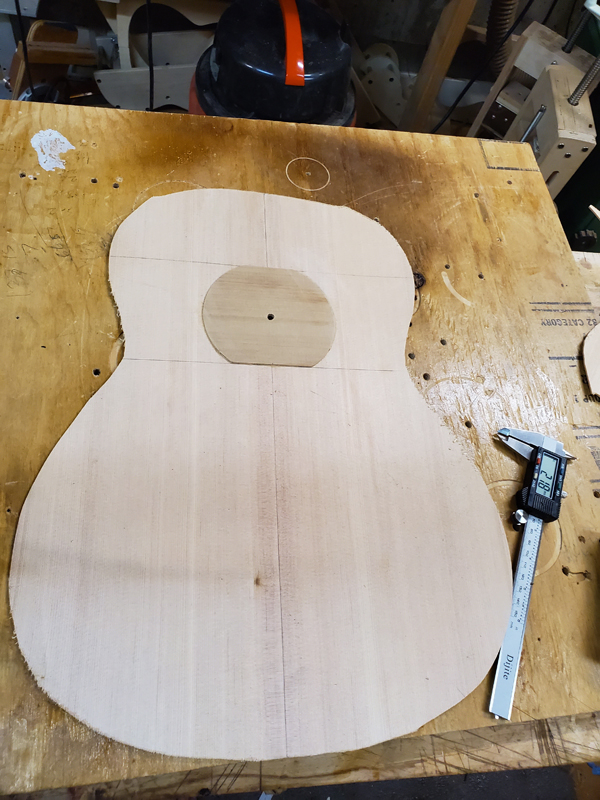
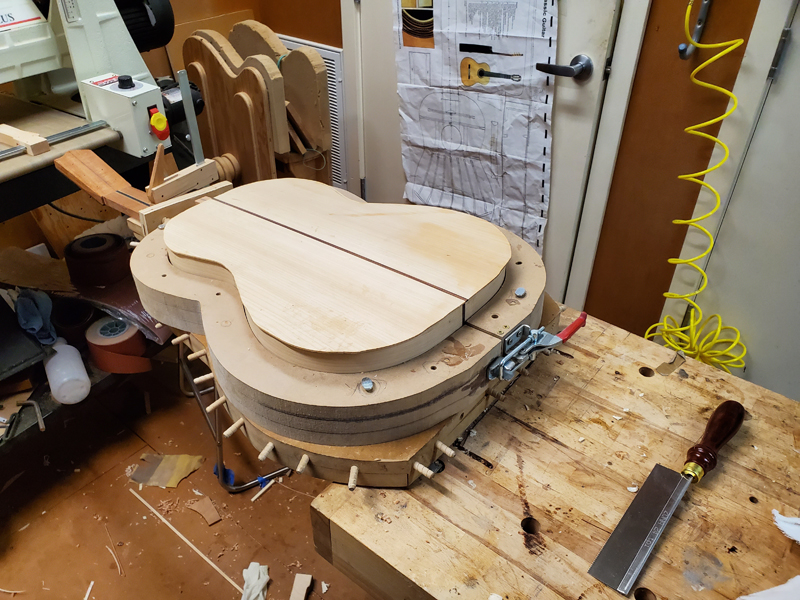
I had the plans printed out. Luckily the guitar is close to exactly the same size as the LMI classical template I already had — which I’d used to build my solera, bending moulds, and build moulds. So I was a step ahead. I joined up a spruce top I had; in the flamenco tradition it’s a cheap “flawed” spruce top. Acoustically it is very nice but I got it cheap.
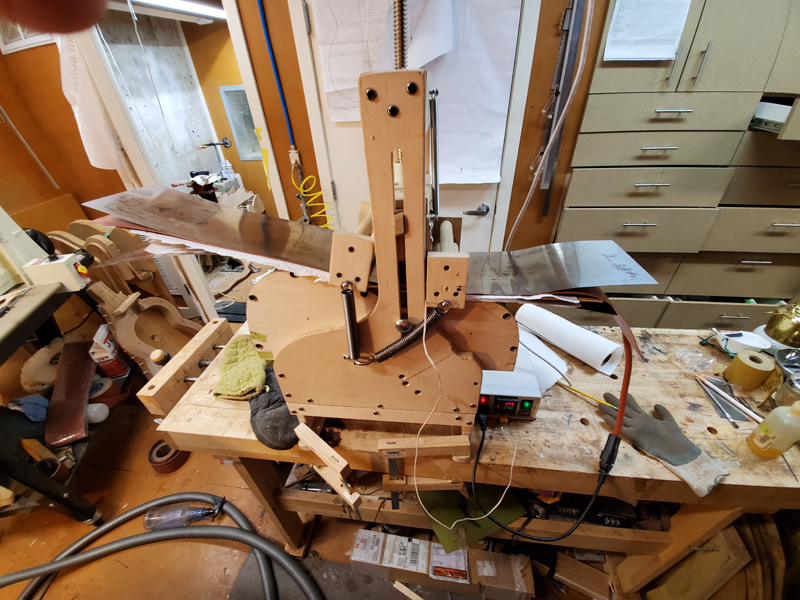
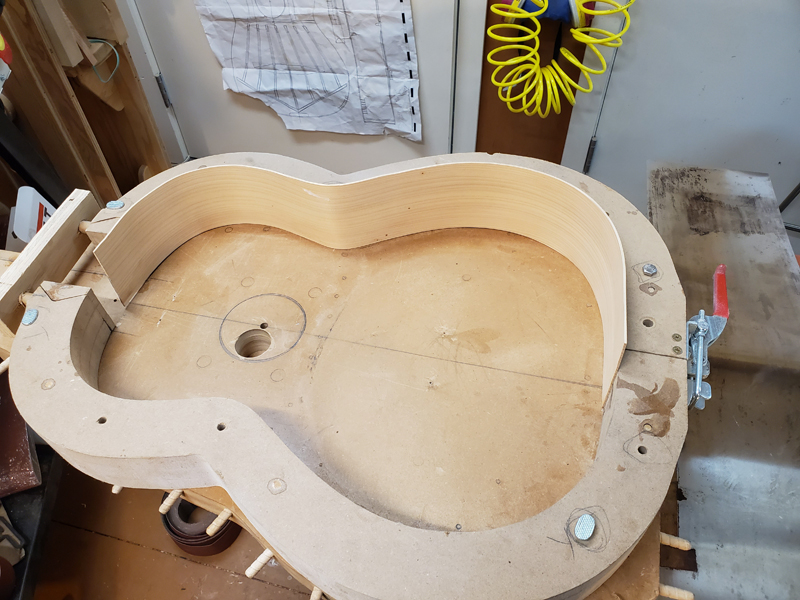
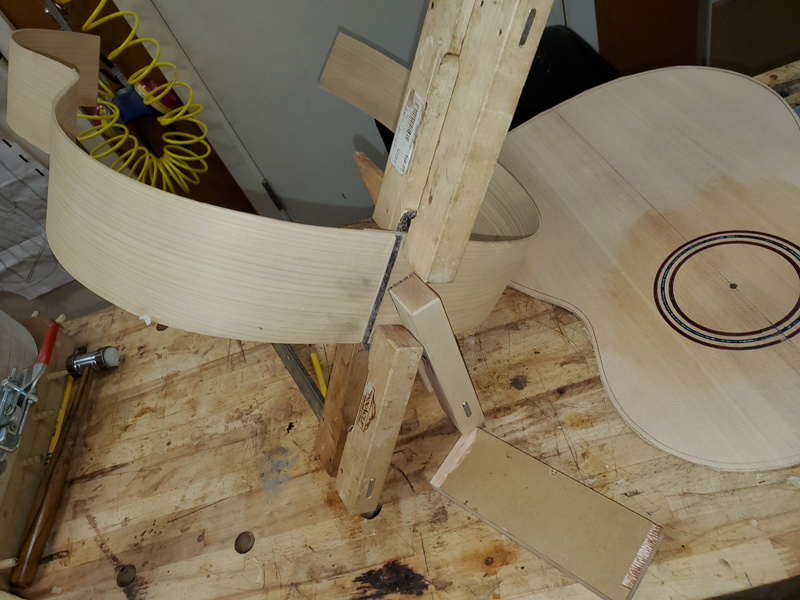
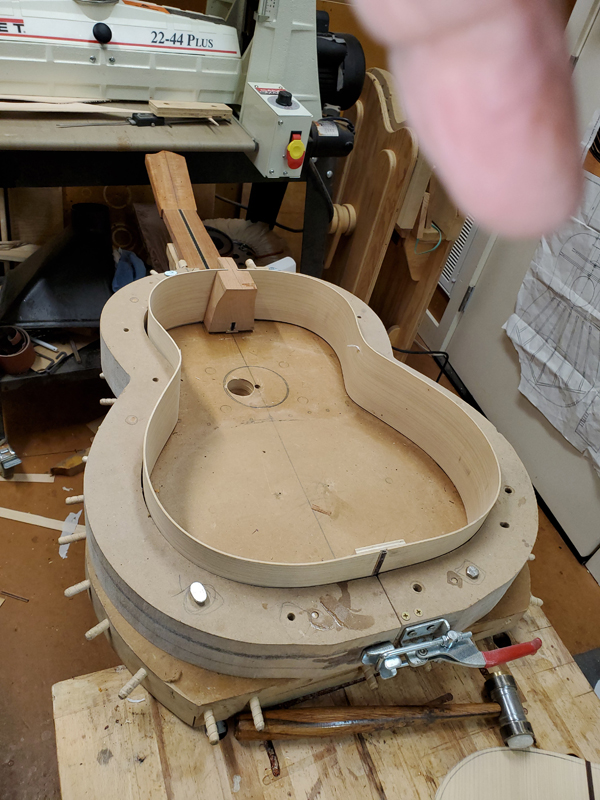
The sides were bent and the rims were assembled on my mould, which thankfully worked with the Chorobo plans. I use a Fox bender for all of my bending now.
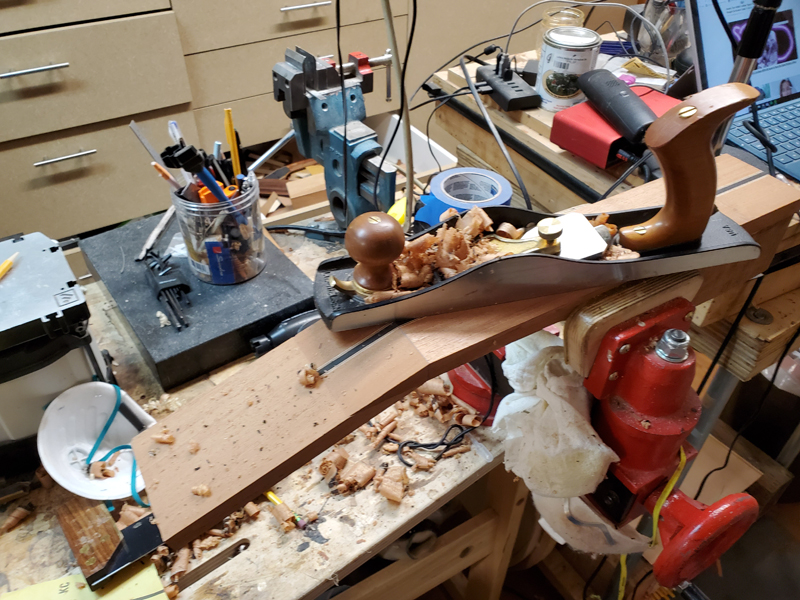
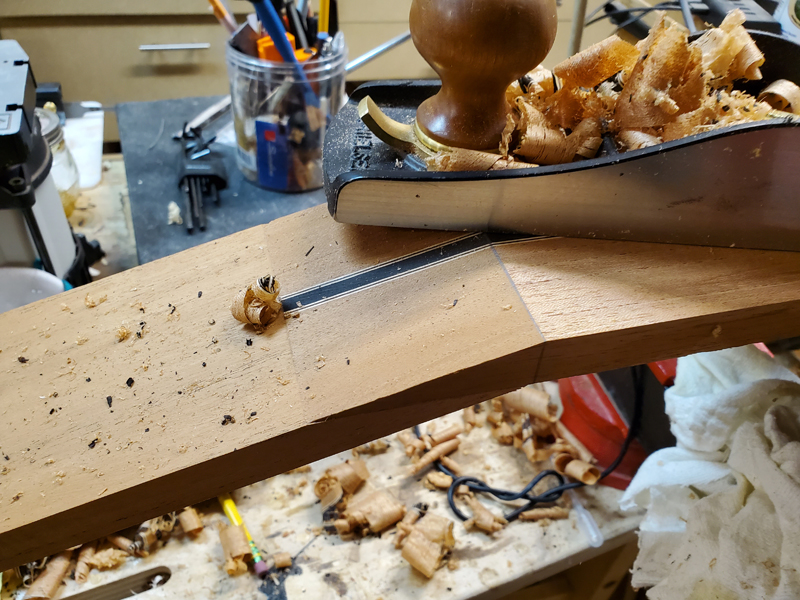
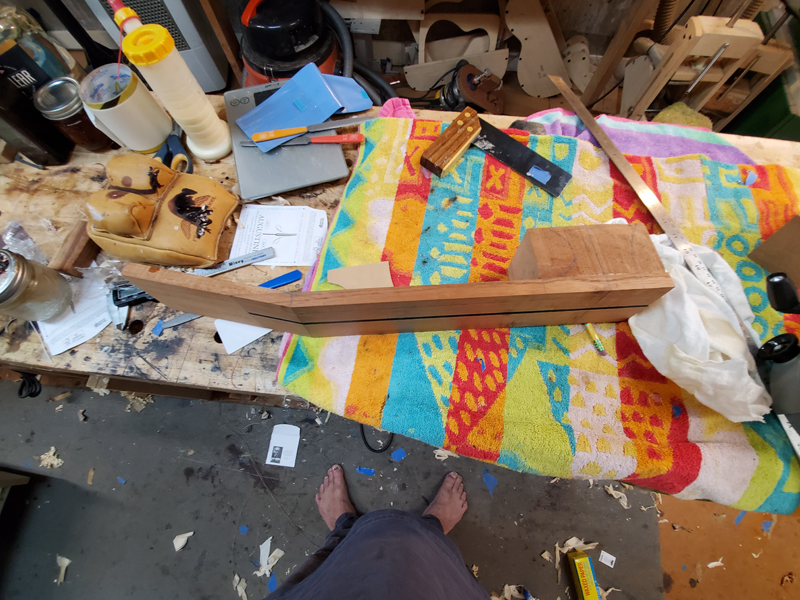
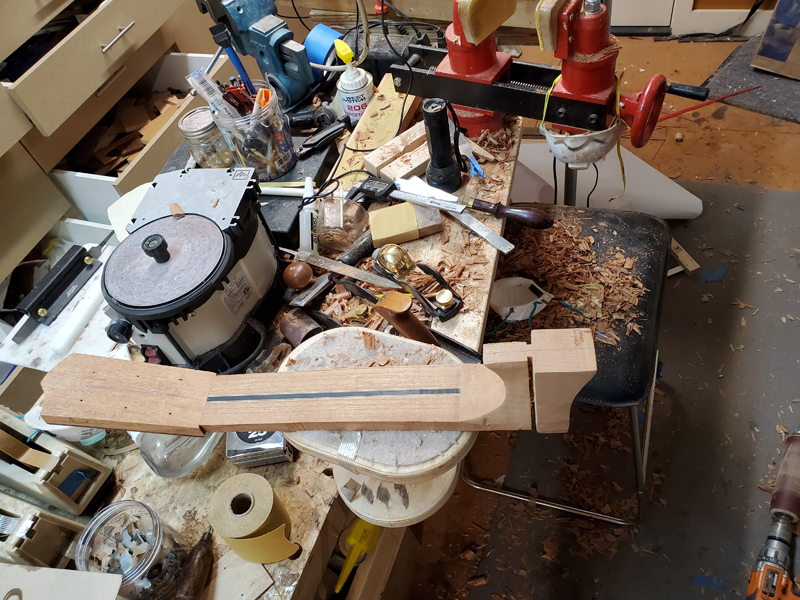
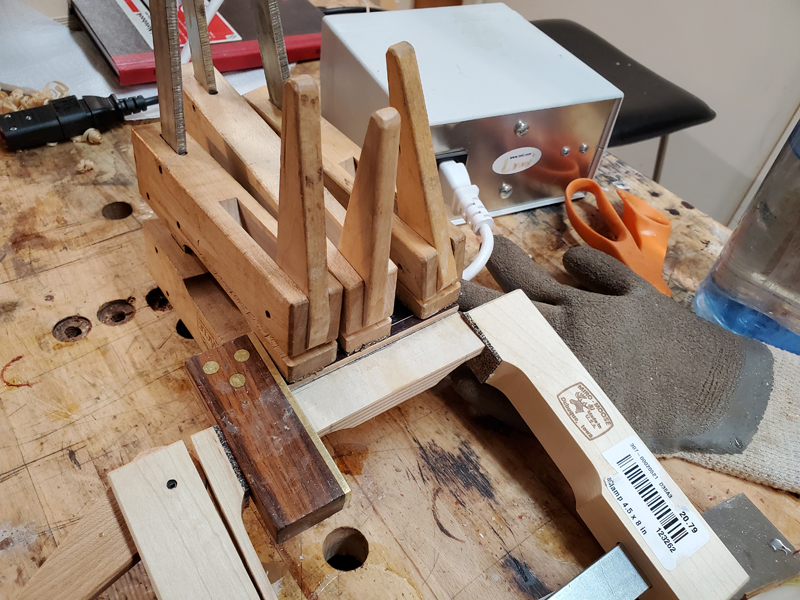
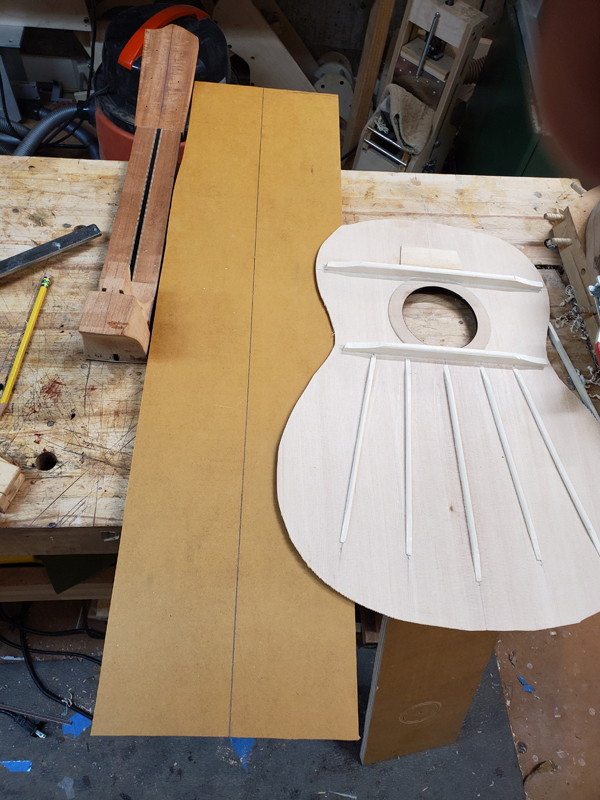
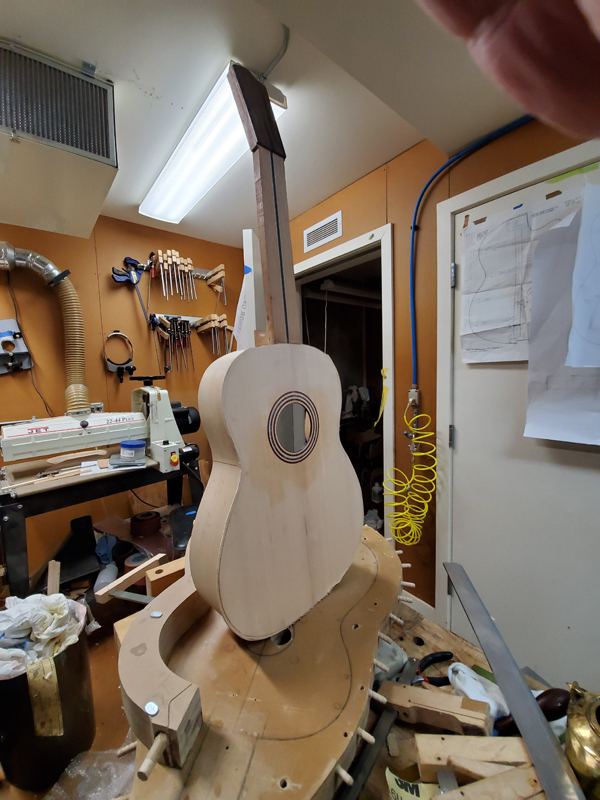
Here are the neck blank and heel block. I followed Paco’s approach for the traditional Spanish heel.
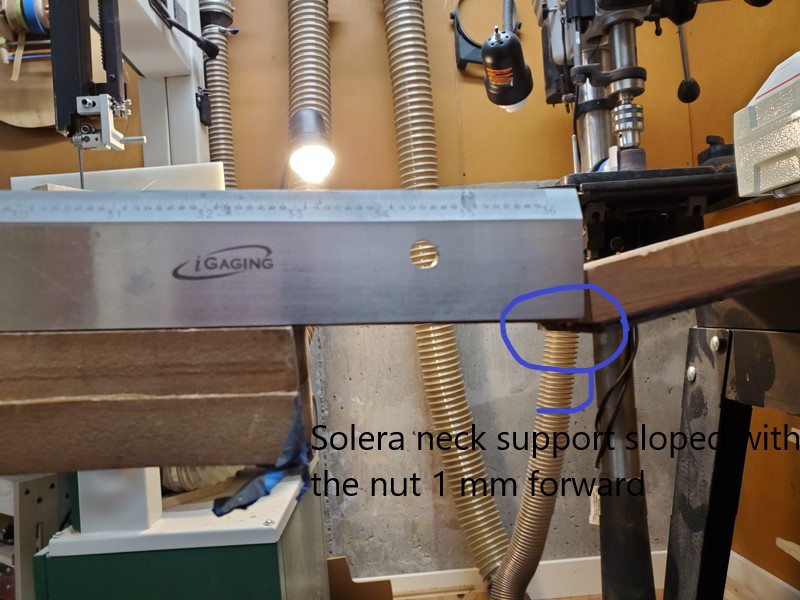
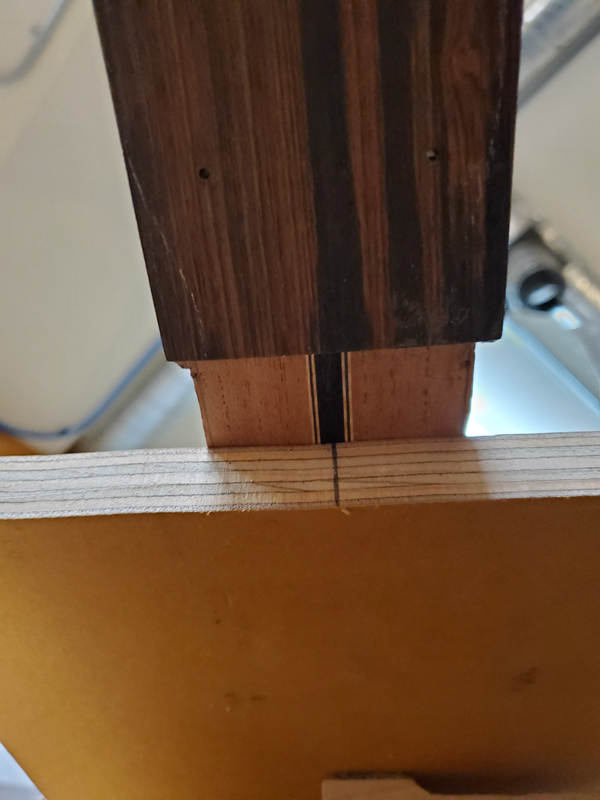
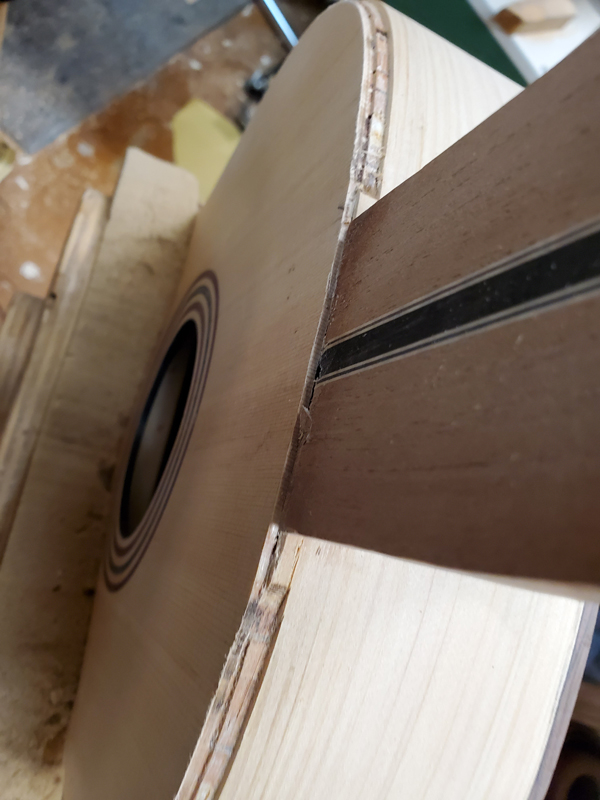
Laying out the neck on the solera. The Spanish heel joint is the heart of traditional flamenco construction — the sides slot directly into the heel rather than being attached separately.
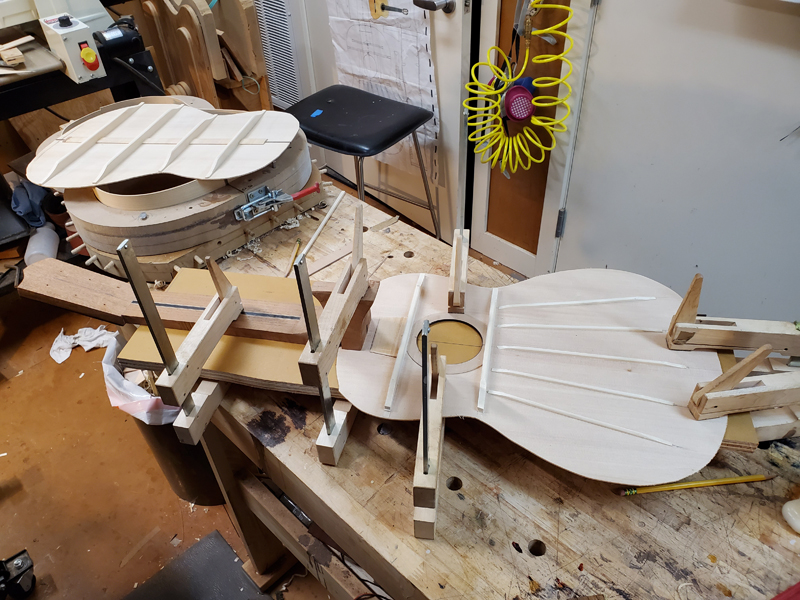
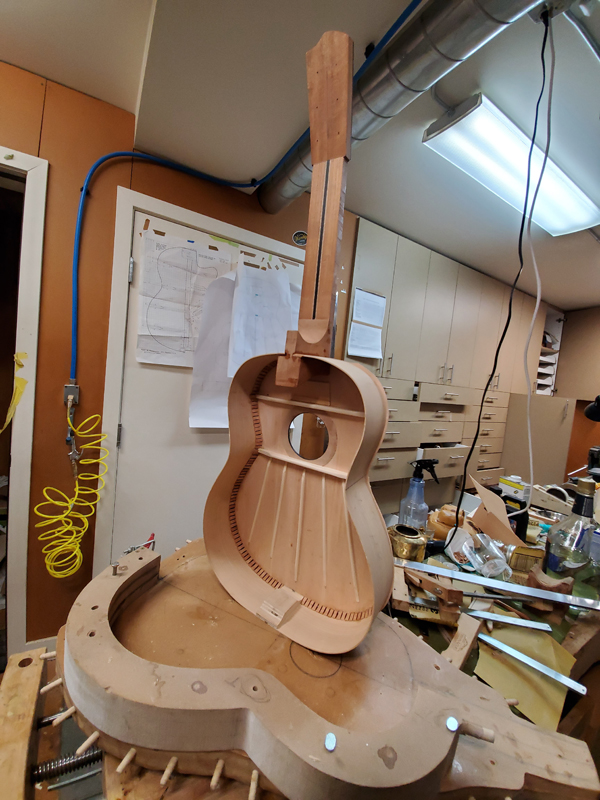
The rims are glued into slots in the neck. This is a very different approach from what I normally do on my steel strings and falcate-braced classicals, where I build the rim assembly separately and bolt on the neck.
Process NoteIn flamenco construction the neck, sides, and top all come together on the solera (a flat building platform). The whole approach is inside-out compared to a bolt-on neck build. It takes some trust in the process when you’re used to doing it the other way.
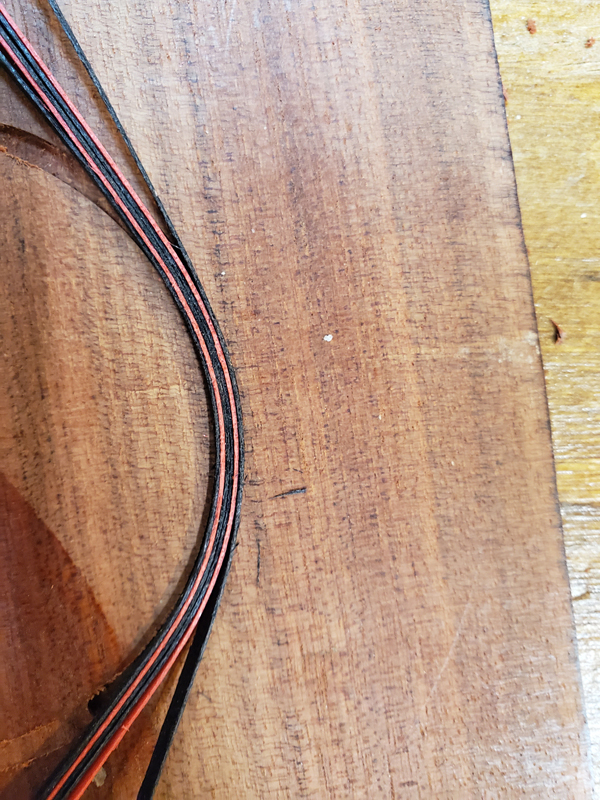
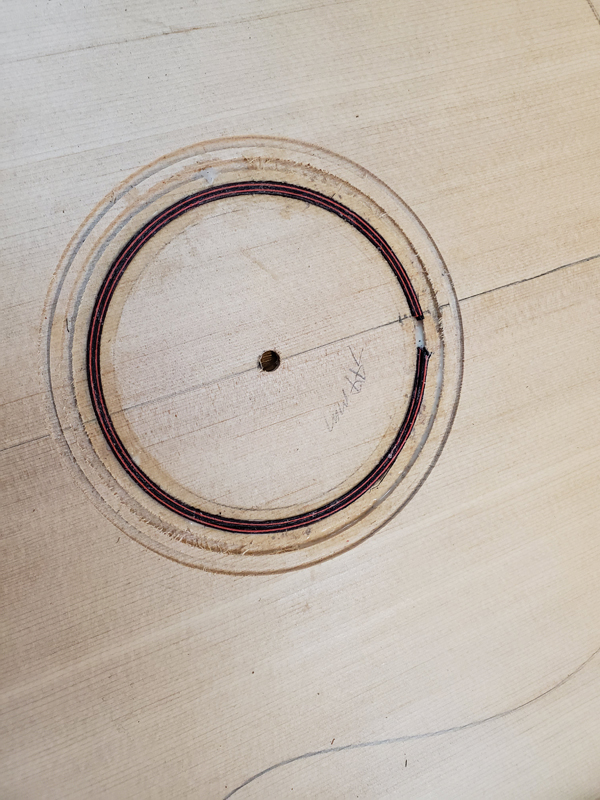
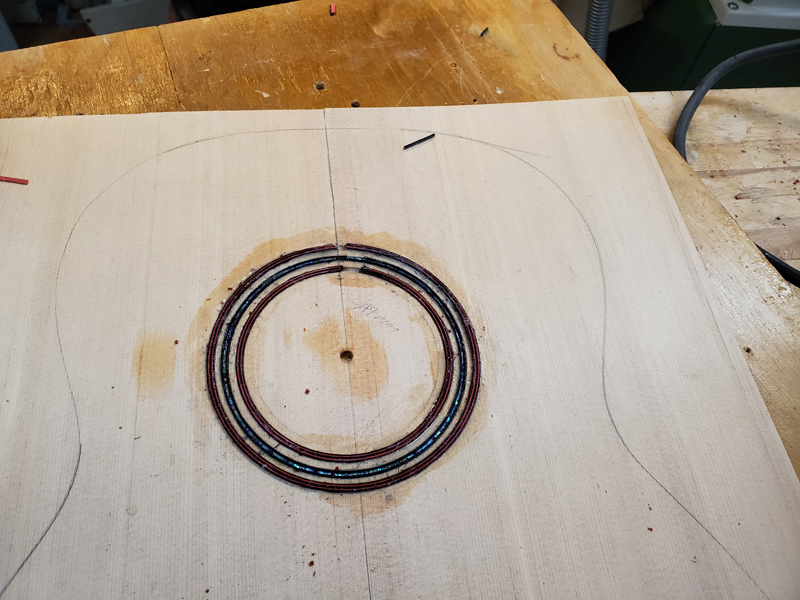
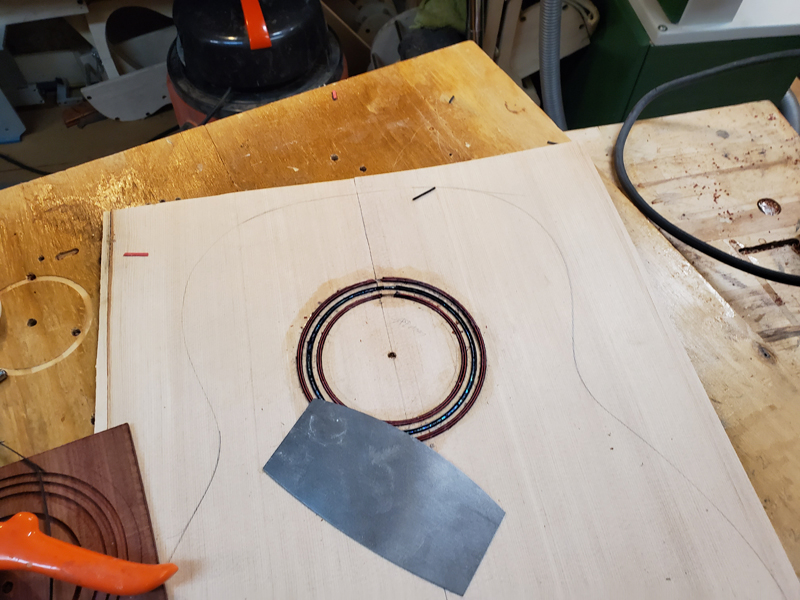
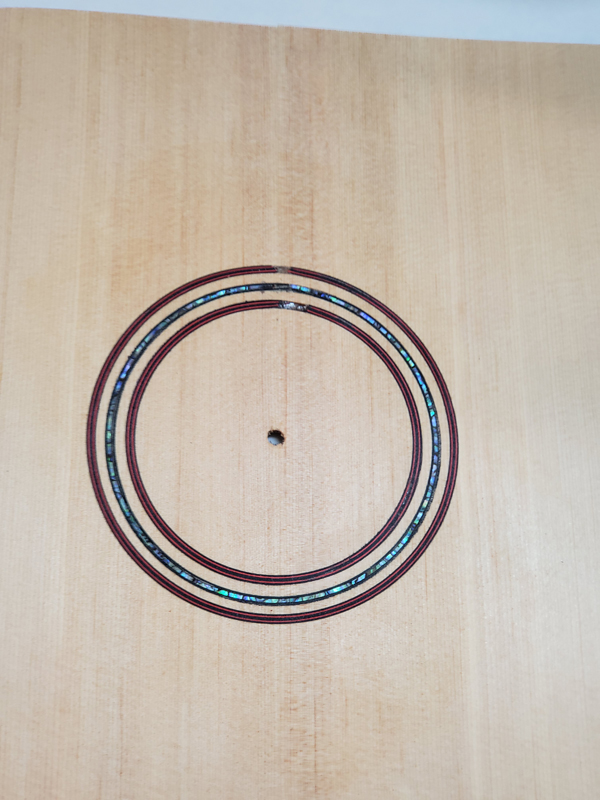
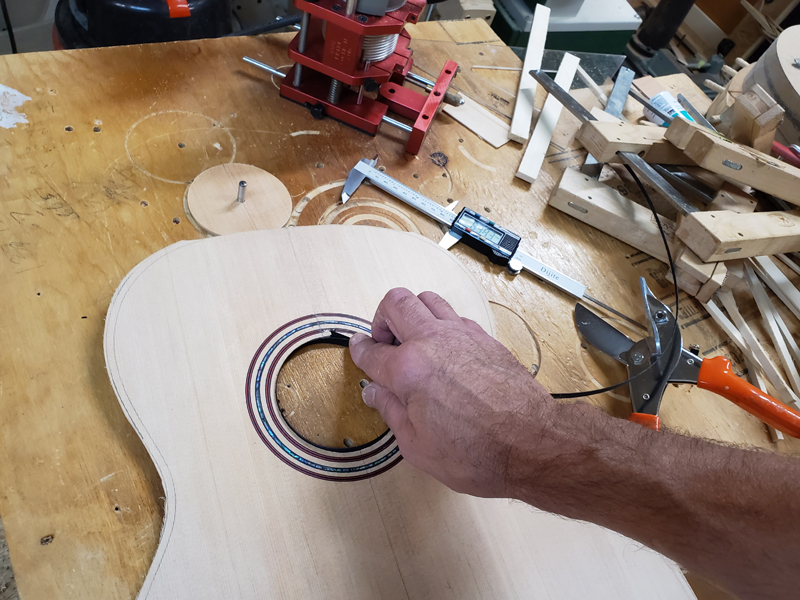
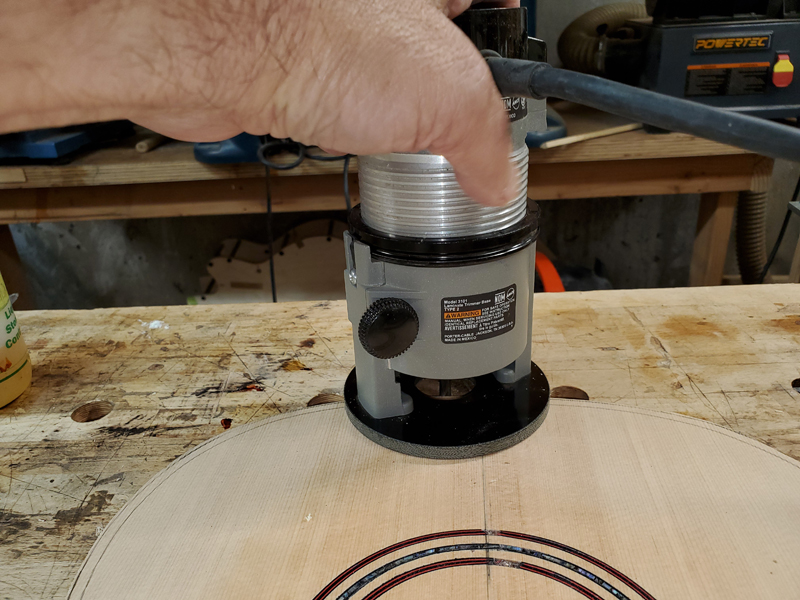
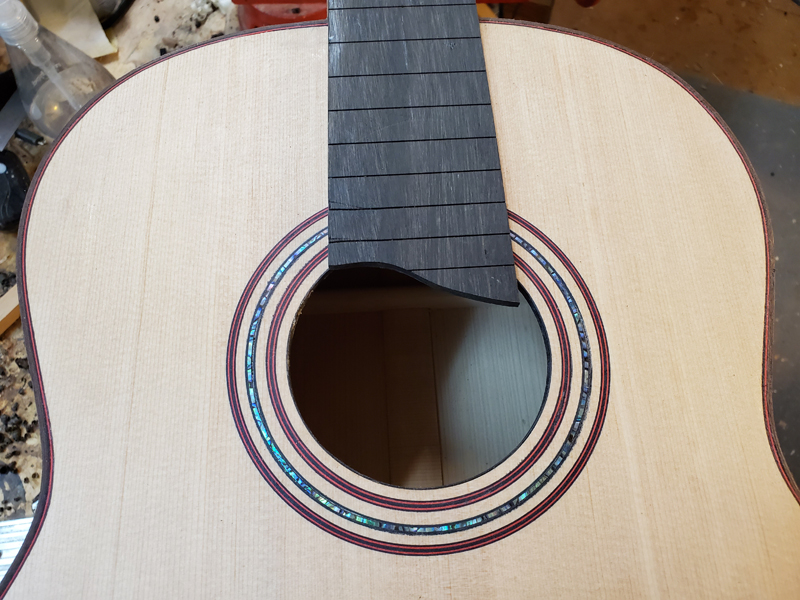
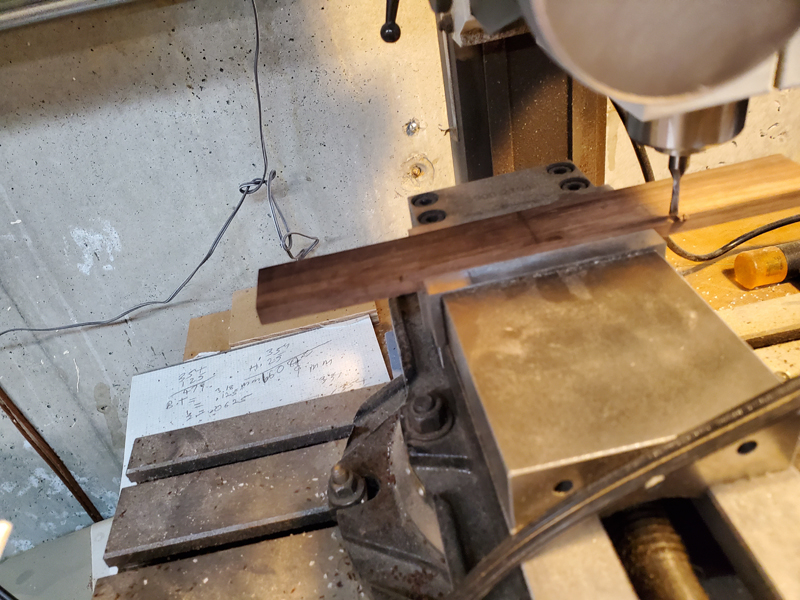
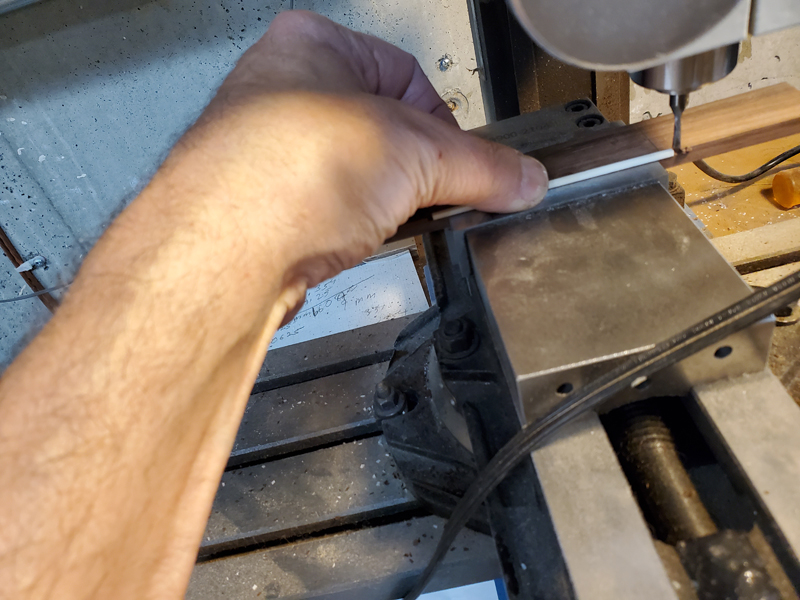
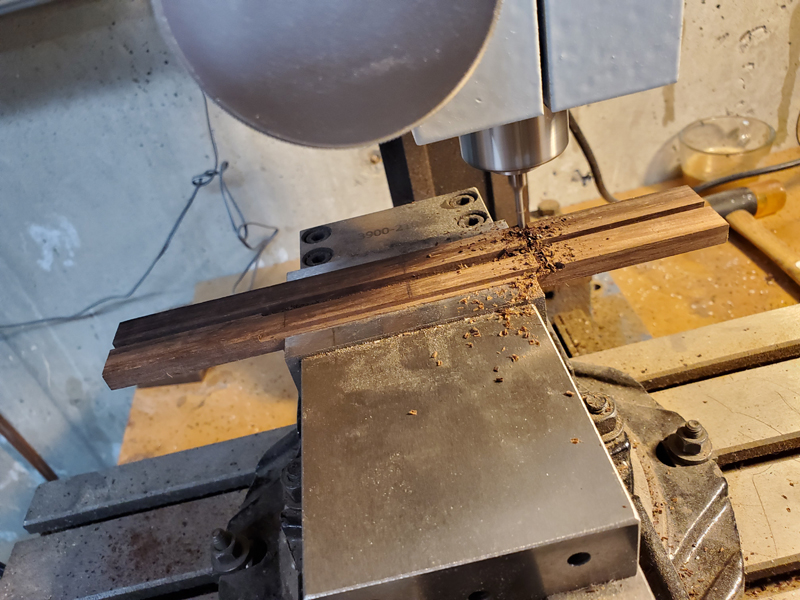
I ended up following Paco’s rosette design. It just happened that I had all the parts including a big enough bit of zipflex. I bunched a bunch of red and black purfling lines together to form the rings. I used my Bishop Cochran plunge router base to cut the slots — I had the right size end mill for the zipflex, and my purfling pattern was also the same width.
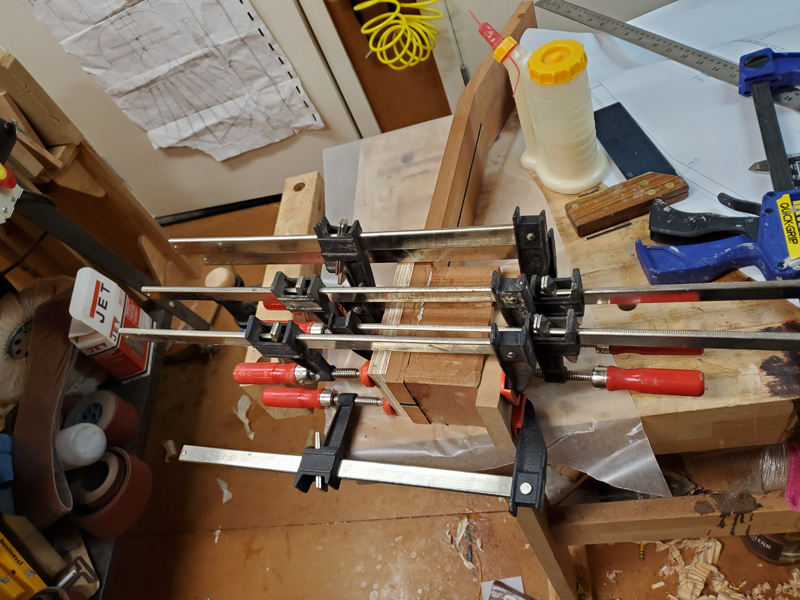
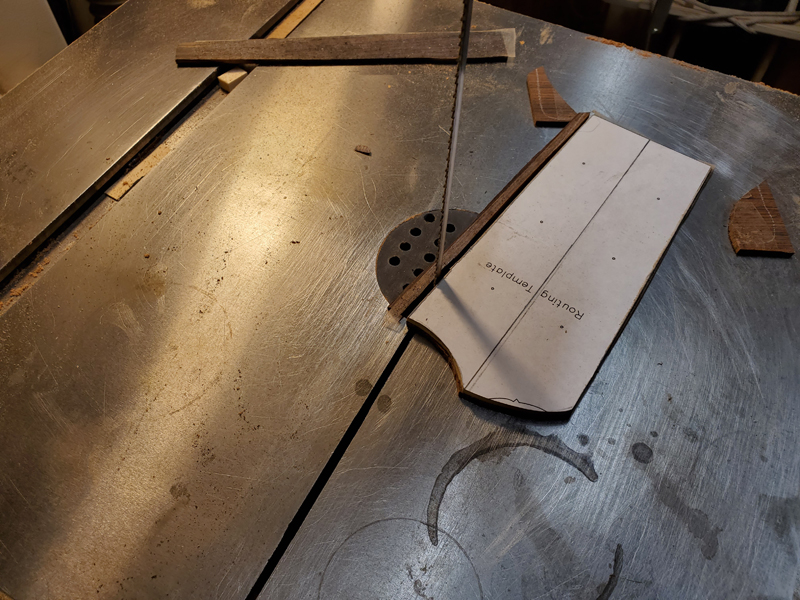
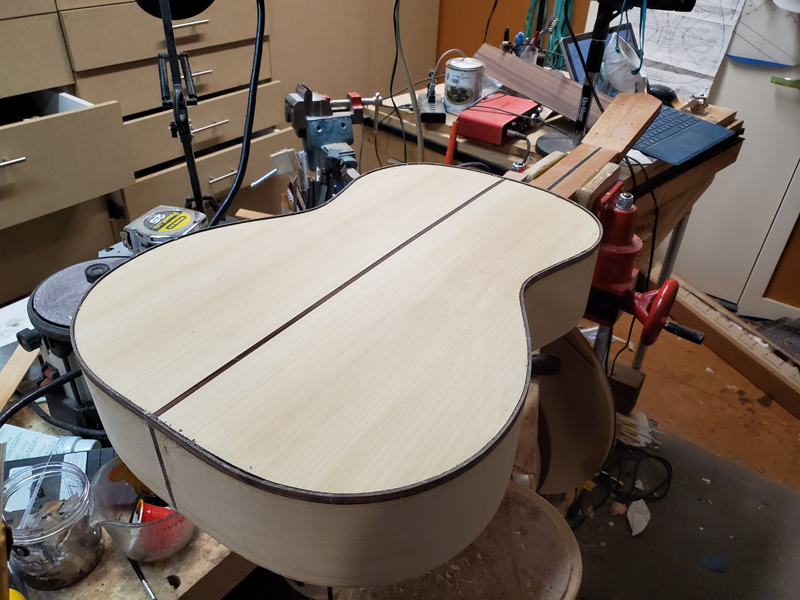
I also joined the back with a rosewood strip.
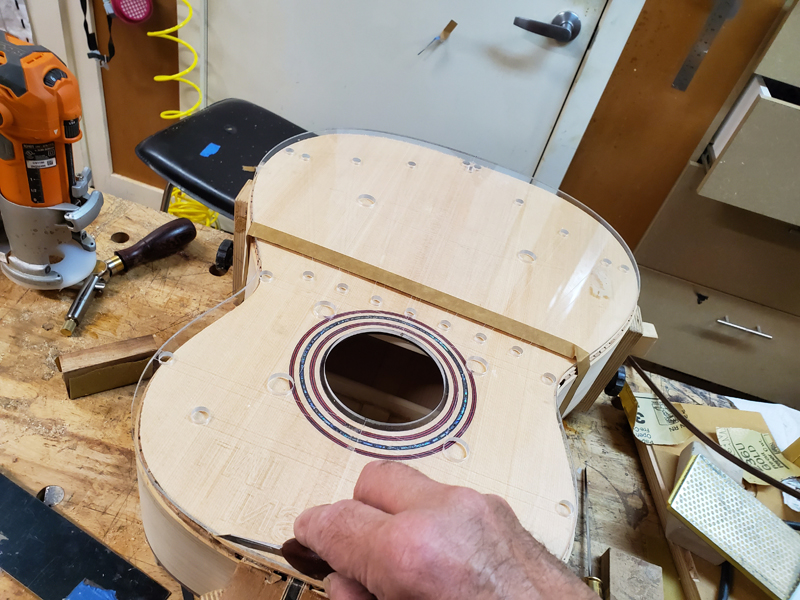
The plan had a side template for the fan braces. Instead of cutting the template, I marked all brace locations directly on the top — each brace location carefully measured and marked. Paco’s bracing is a traditional fan pattern.
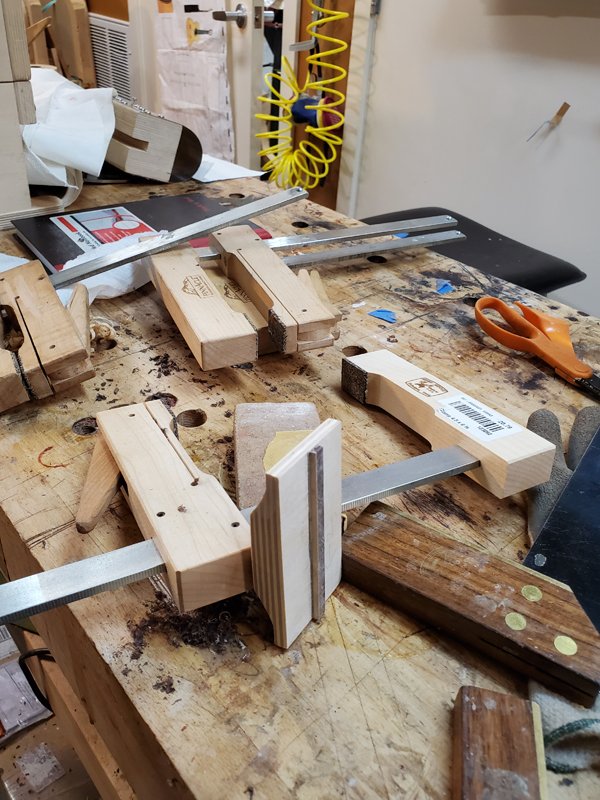
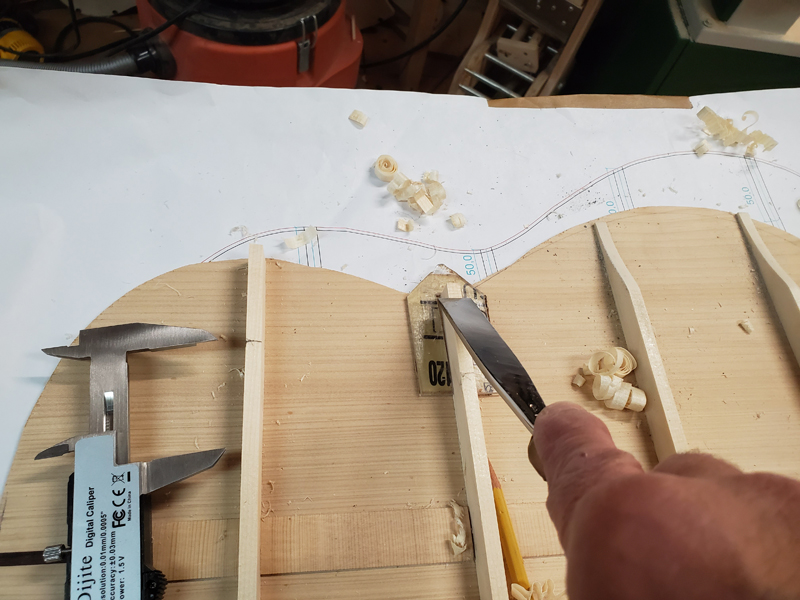
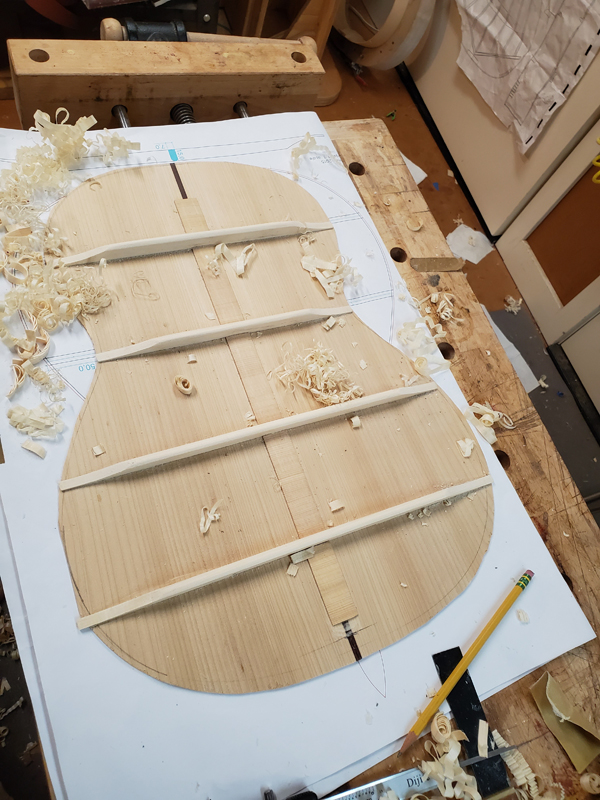
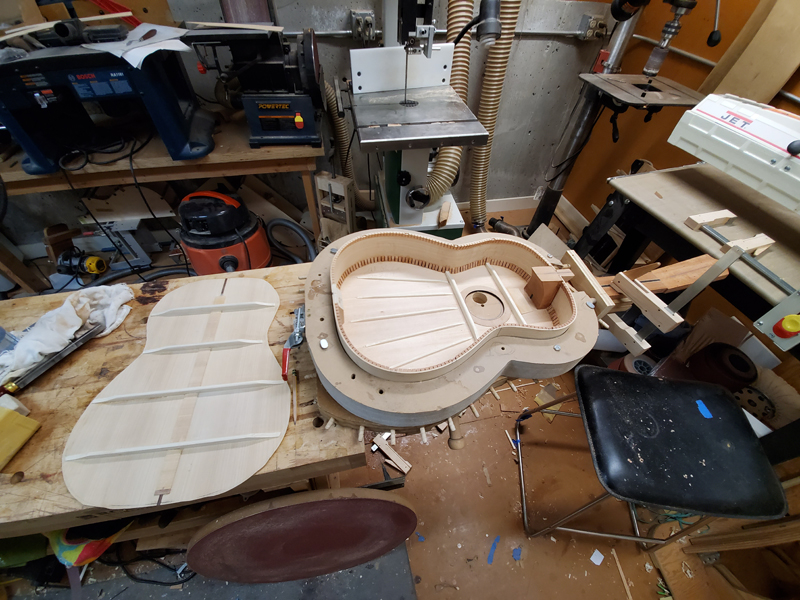
I pre-shaped and fit each brace. Here’s the set of braces, tuned and ready to glue.
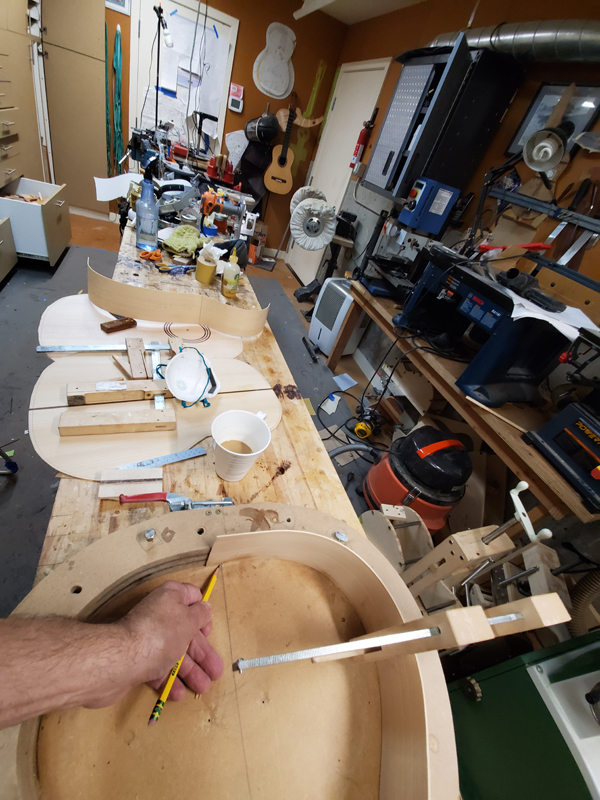
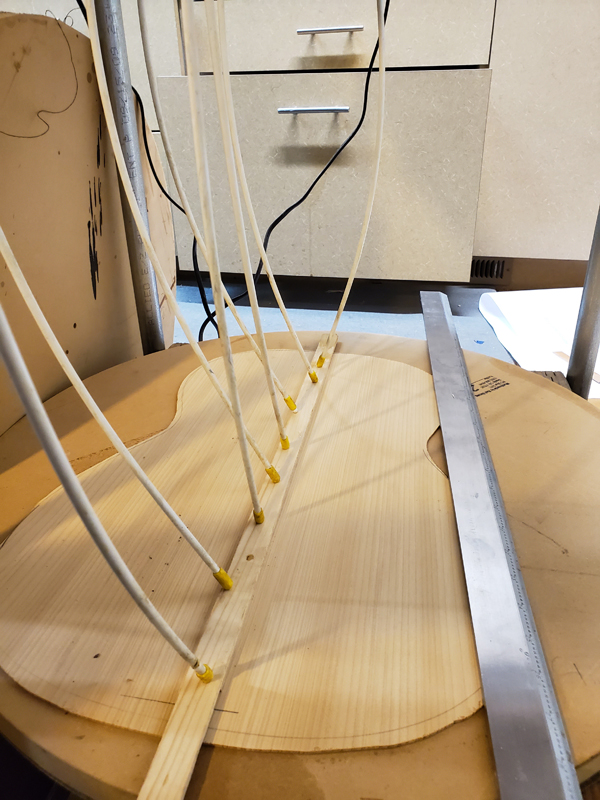
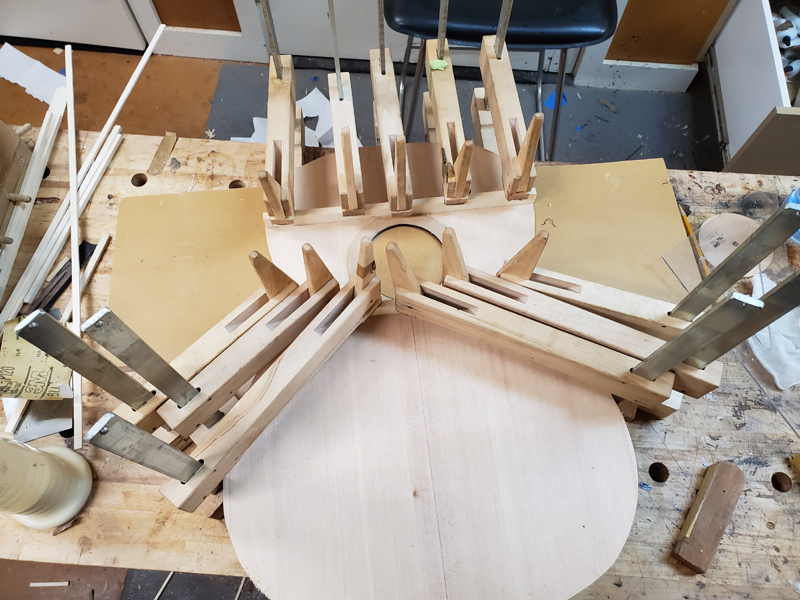
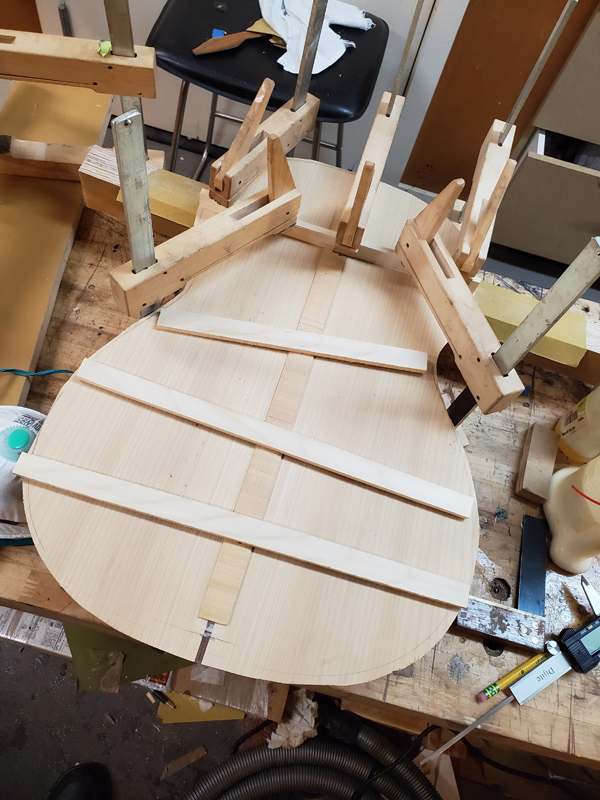
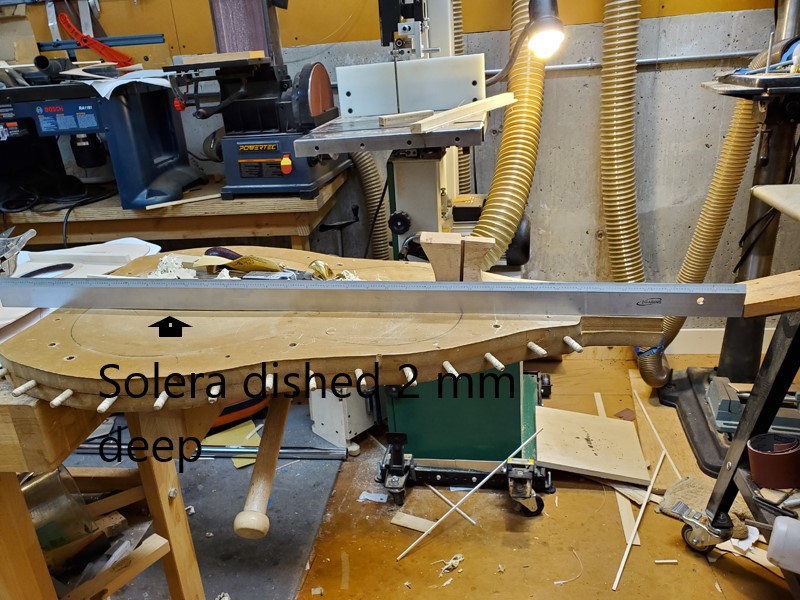
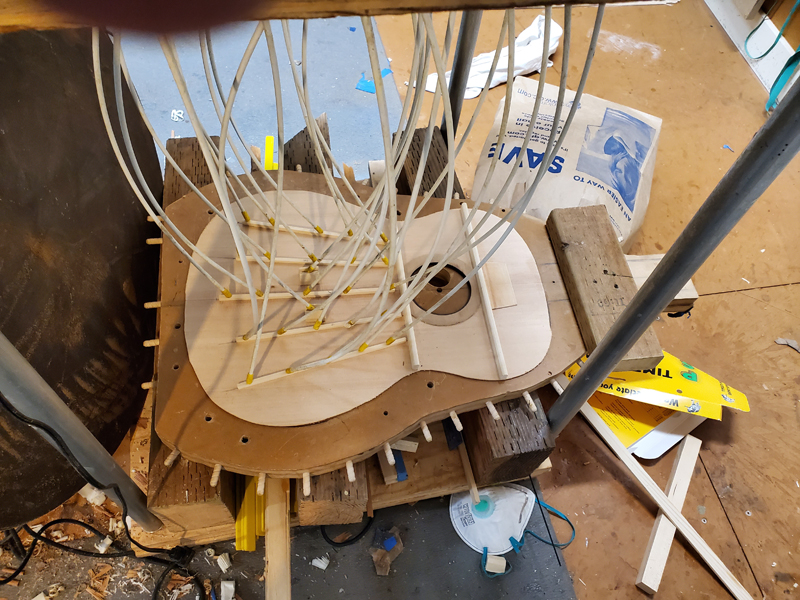
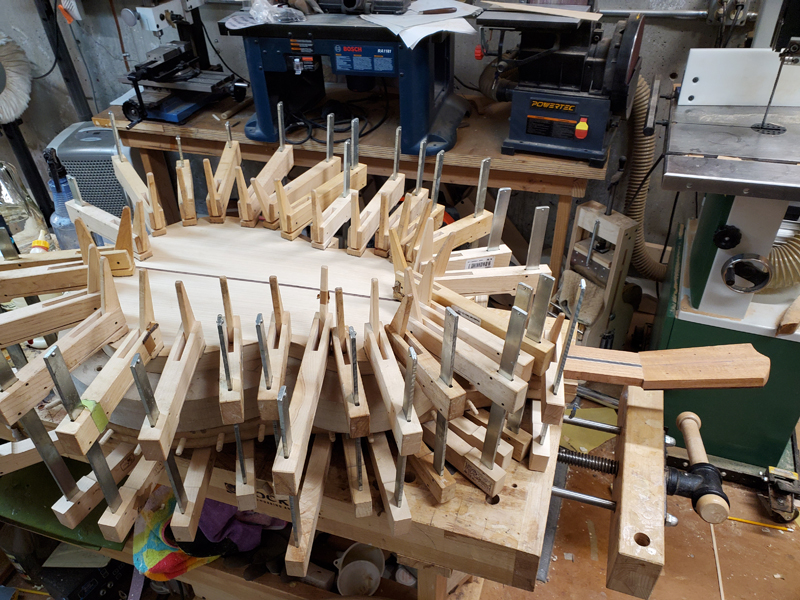
Gluing the fan braces using go-bars on my dished workboard. The braces are intentionally graduated — taller in the centre, tapering toward the edges.
I also braced the back. The back braces are more straightforward — three ladder braces.
The harmonic bars and closing bars complete the top bracing. The upper transverse brace and the sound hole area get reinforced with a small plate.
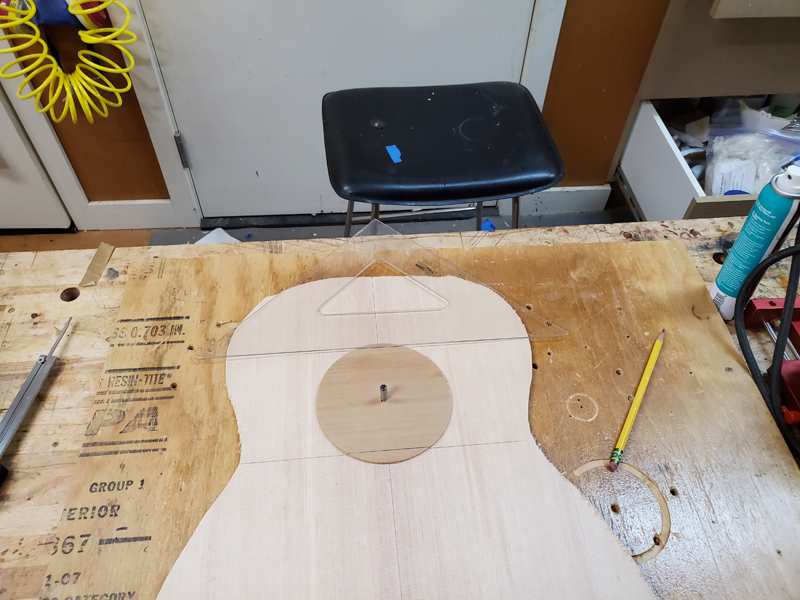
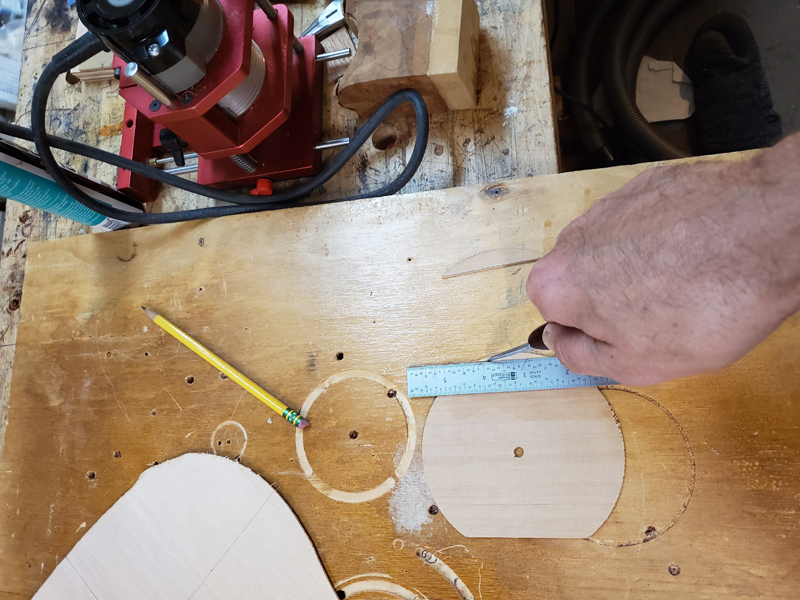
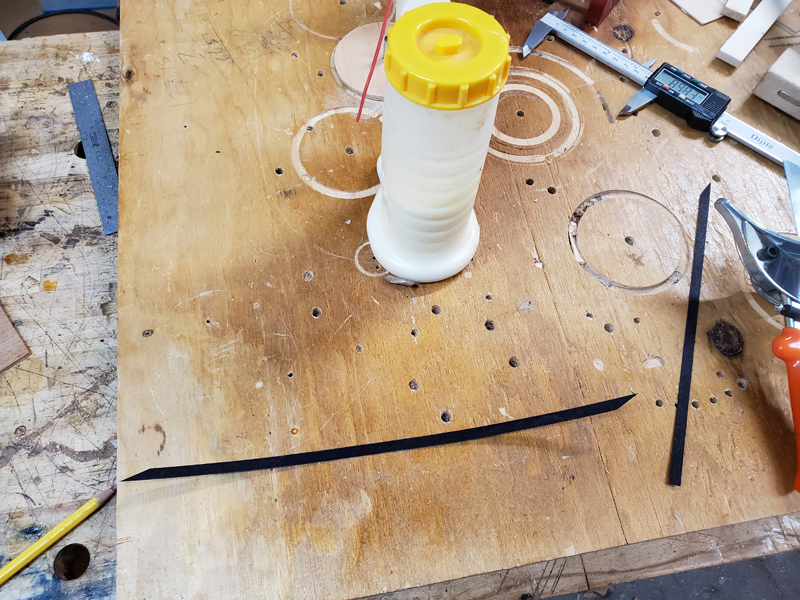
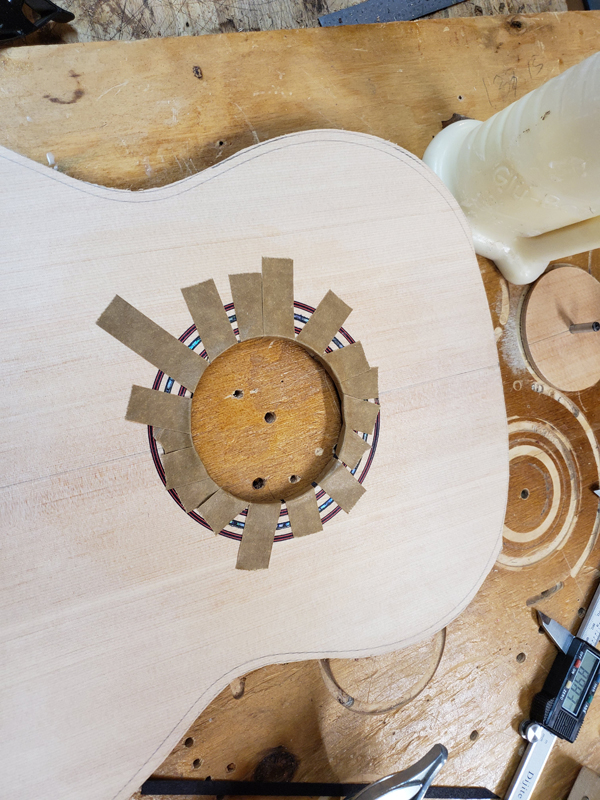
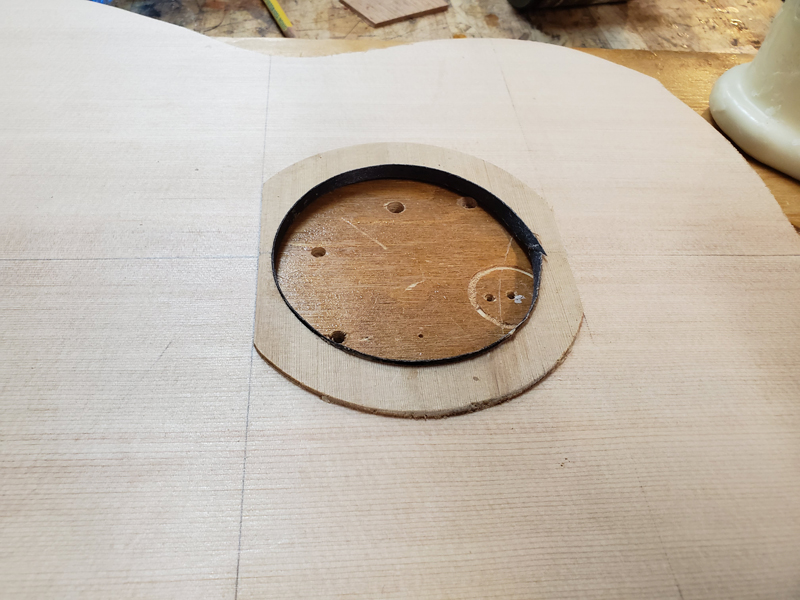
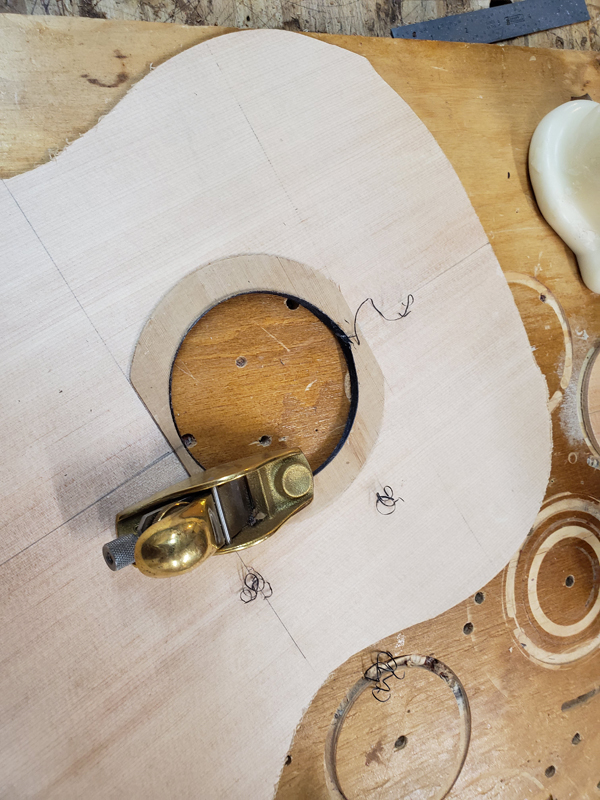
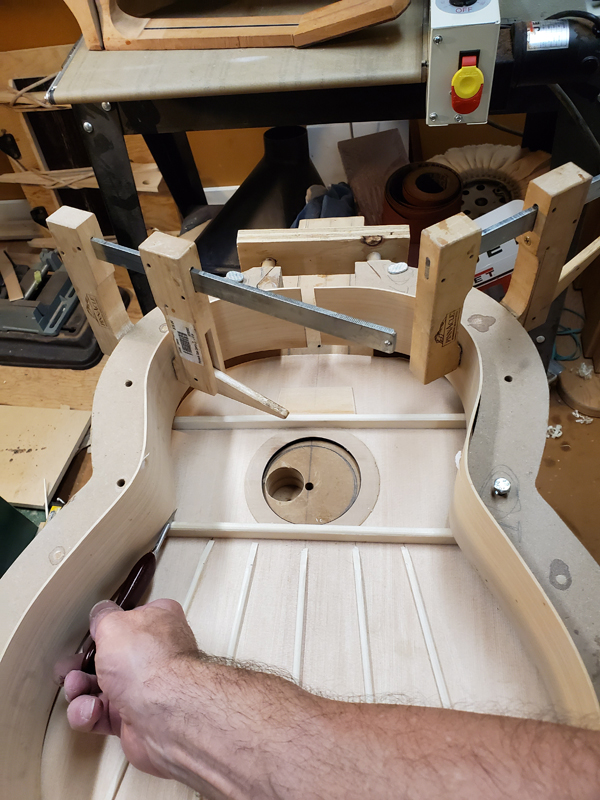
Before bracing the top, I needed to install a sound hole donut and finish off the sound hole. Using my router I cut a circle of Western Red Cedar. In its crossgrain orientation I marked where the transverse braces cross the donut, then used a scalpel to cut to size.
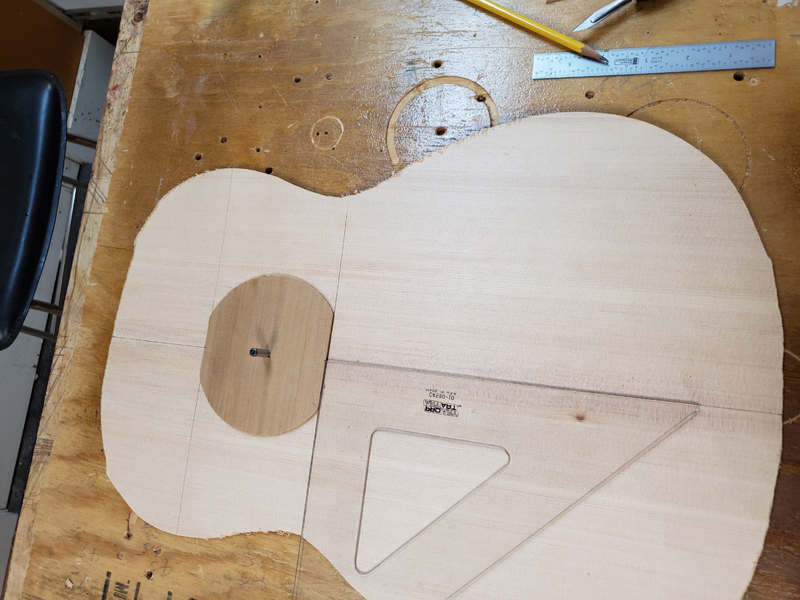
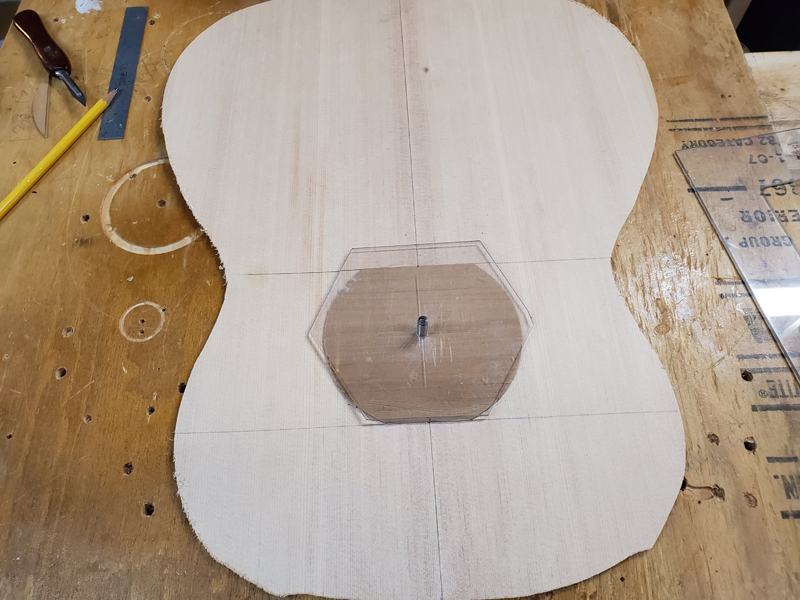
I used a right triangle to orient the ring and glue it down.
While that glue was drying I glued down the back’s center strip.
I used my router to cut out the sound hole.
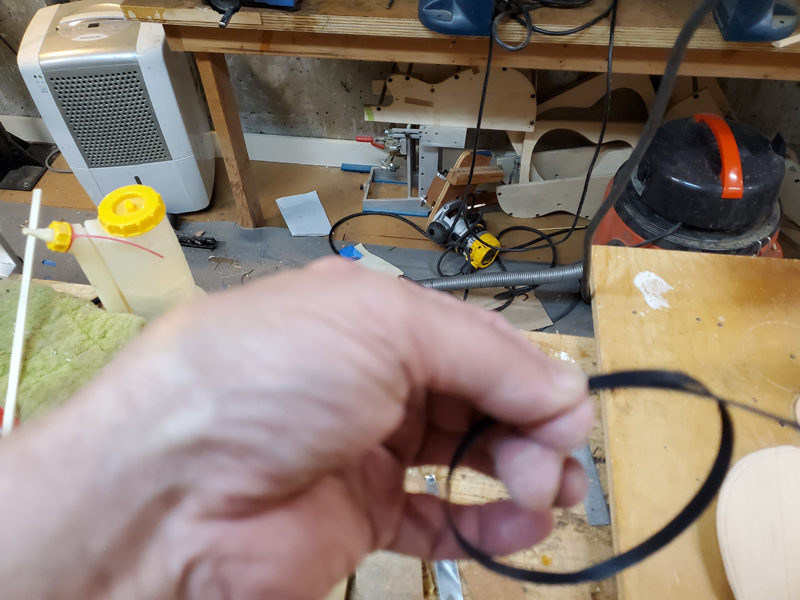
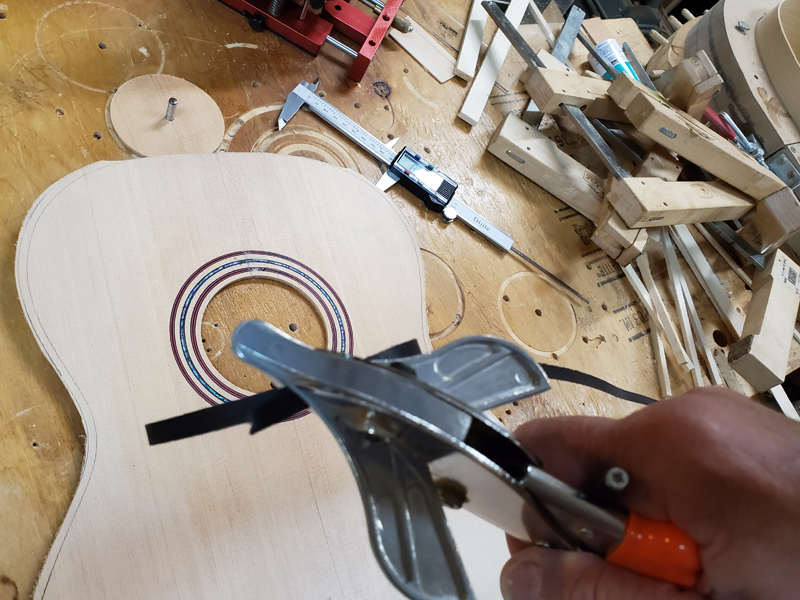
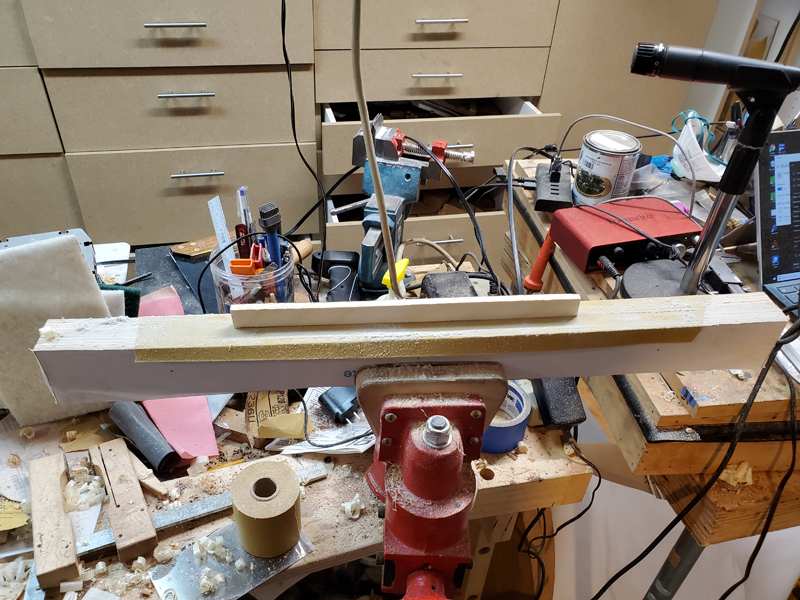
TipHere is a tip that is probably one of the biggest time savers I have adopted. I now use carbon fiber to reinforce my braces on the tension side (the side glued to the plate). It takes seconds, it is easy to work, and you will never have a broken brace. I do this on every instrument now.
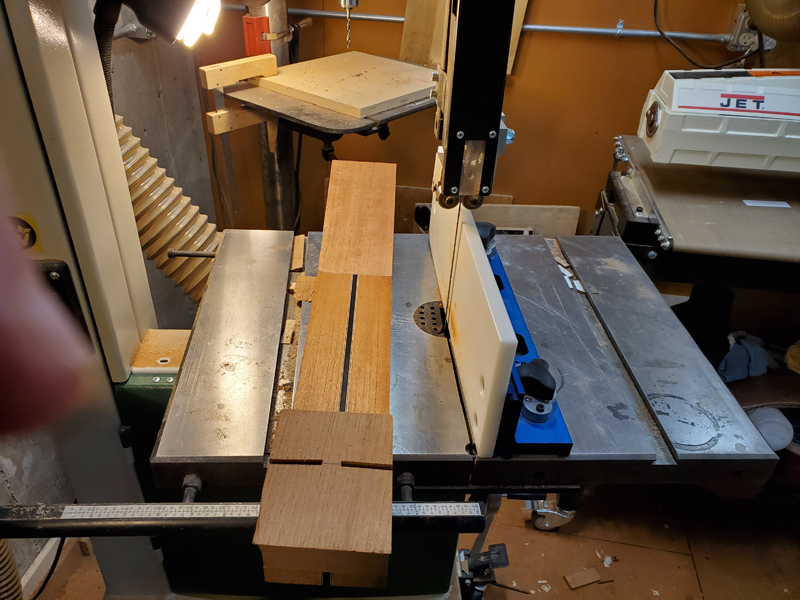
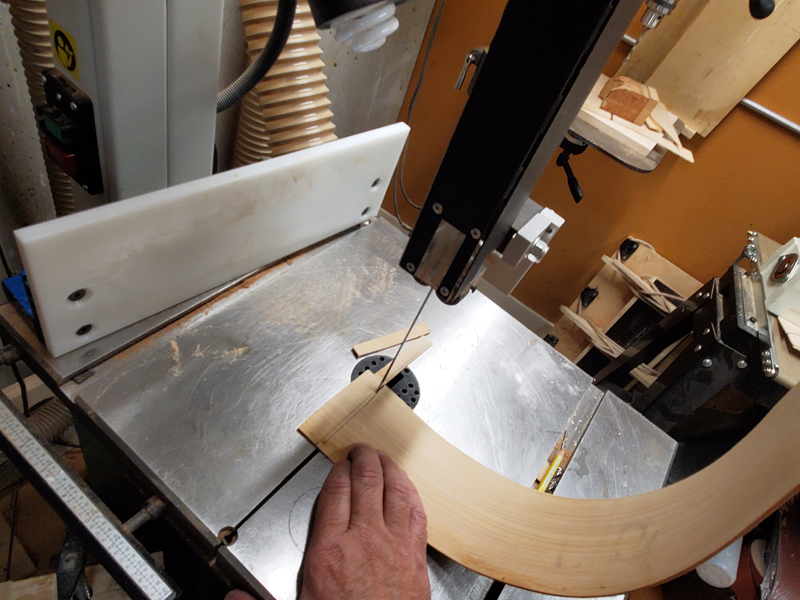
I cut the braces using a template and bandsaw, then finish-shaped them. The upper face brace and the lower closing bar get glued first.
The harmonic bars are next. These run diagonally across the lower bout and are critical to the flamenco sound — bright, percussive, with fast attack.
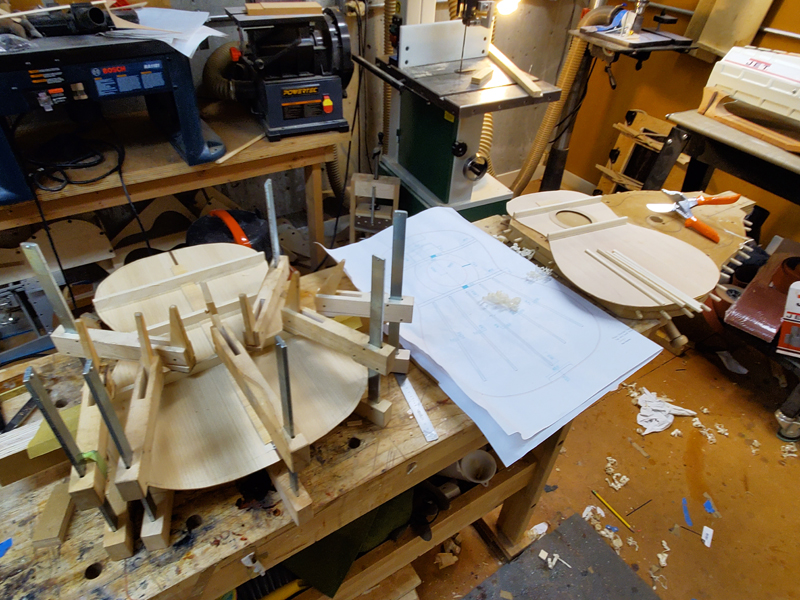
Go-bar gluing session for the remaining fan braces. Everything is referenced back to the solera to keep the geometry true.
With all bracing complete, I shaped and tapered the braces. The scalloping is done carefully to hit target weights while maintaining stiffness where it matters.
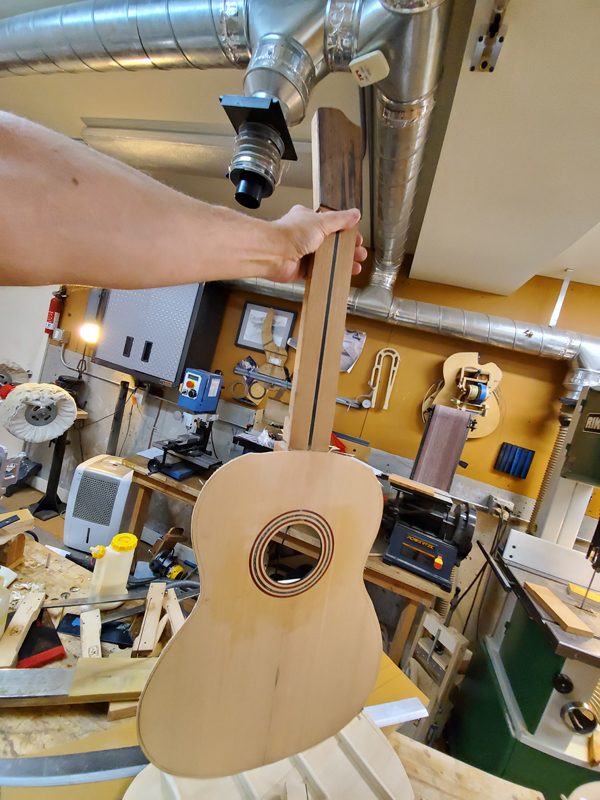
Paco’s method is to glue the top to the neck first. I normally glue the rims to the neck before the top, but the traditional Spanish way works differently. Flamenco wants to be a little looser, so instead of linings or kerfed linings, tentellones are used — small individual blocks rather than continuous strips.
Traditional MethodIn traditional Spanish construction, the top is glued to the neck and solera first, then the sides are inserted into the Spanish heel slots. This is the opposite of the “rim-first” approach common in steel string building. It requires precise alignment but produces a very rigid neck joint.
Before I can glue on the neck I need to adjust the curf — Paco uses a rebate that he hand-cuts into the top edge of the rims. I also needed to fit the top to the body, checking the overhang all around.
Gluing the top. This is one of those hold-your-breath moments in guitar building — once it’s down, it’s down.
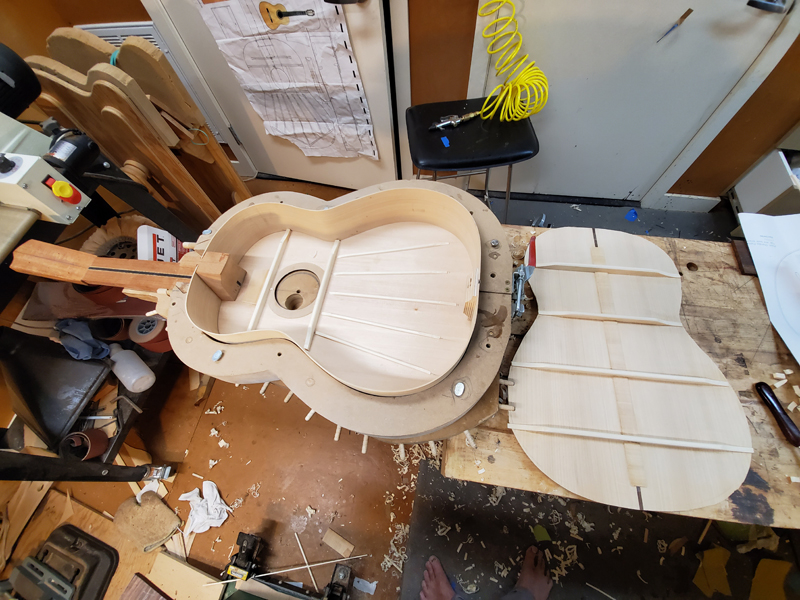
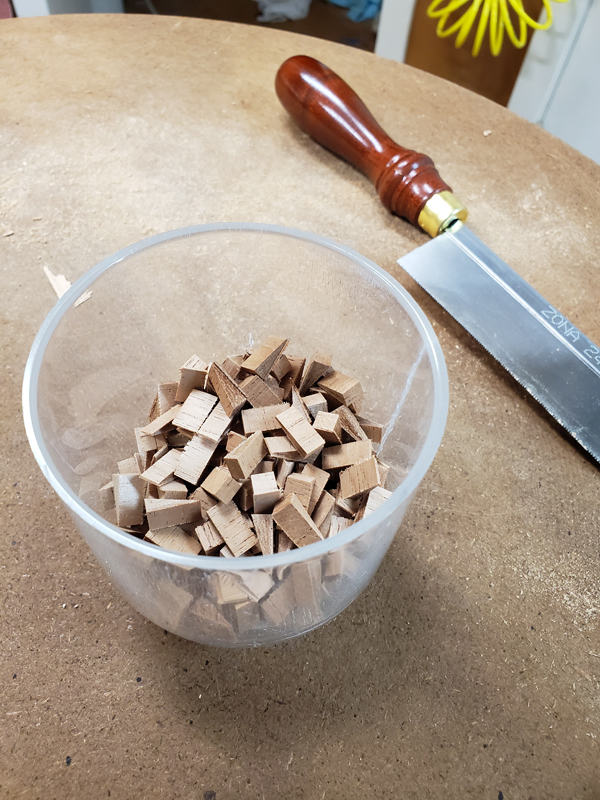
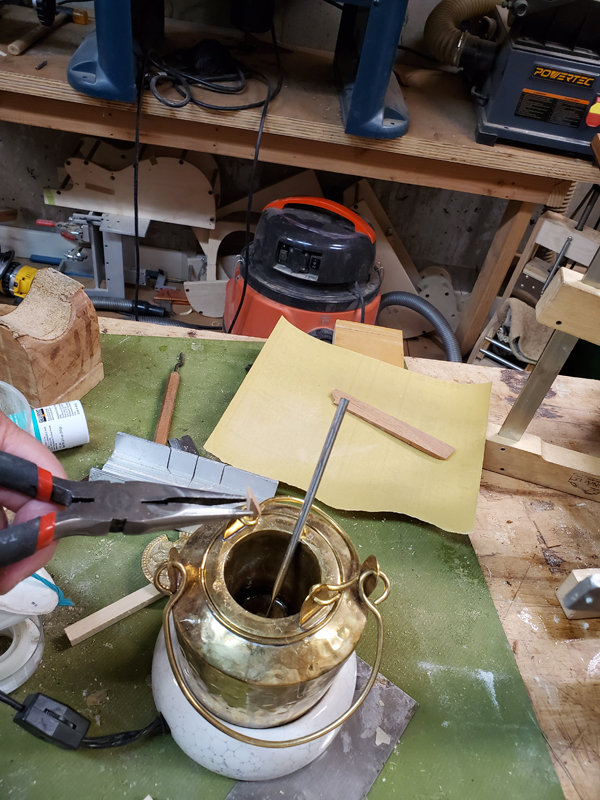
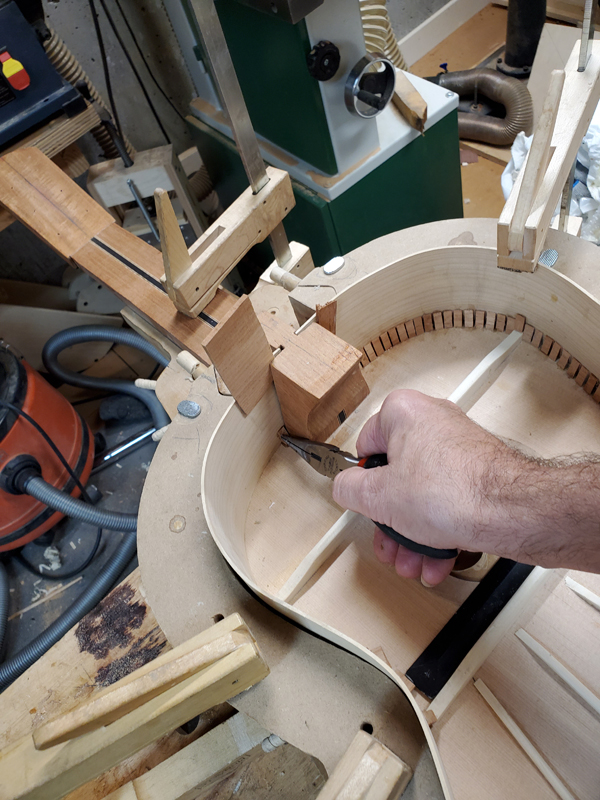
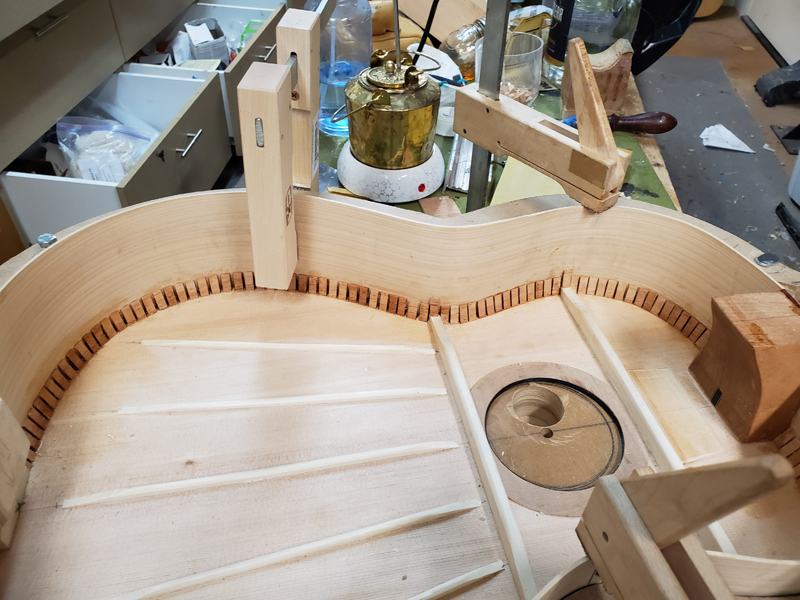
With the top glued, I can now fit the tentellones. These small blocks support the top-to-rim joint from the inside.
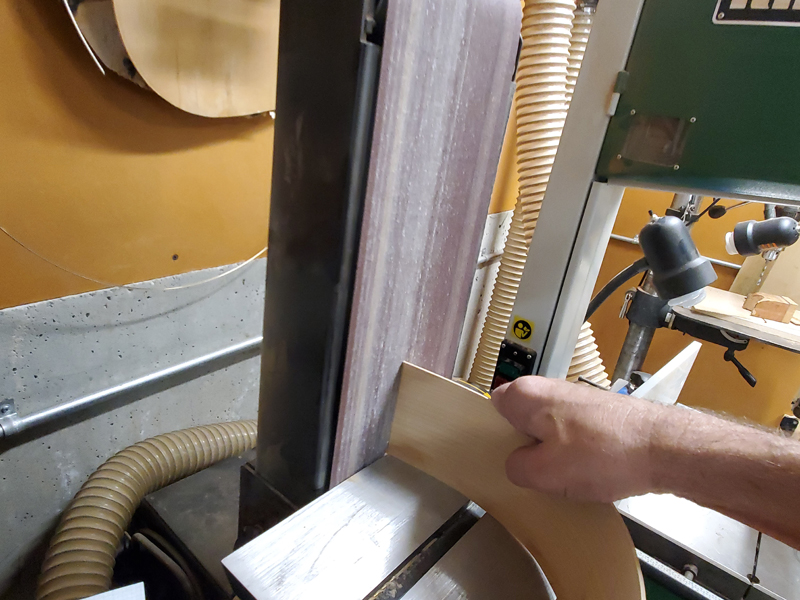
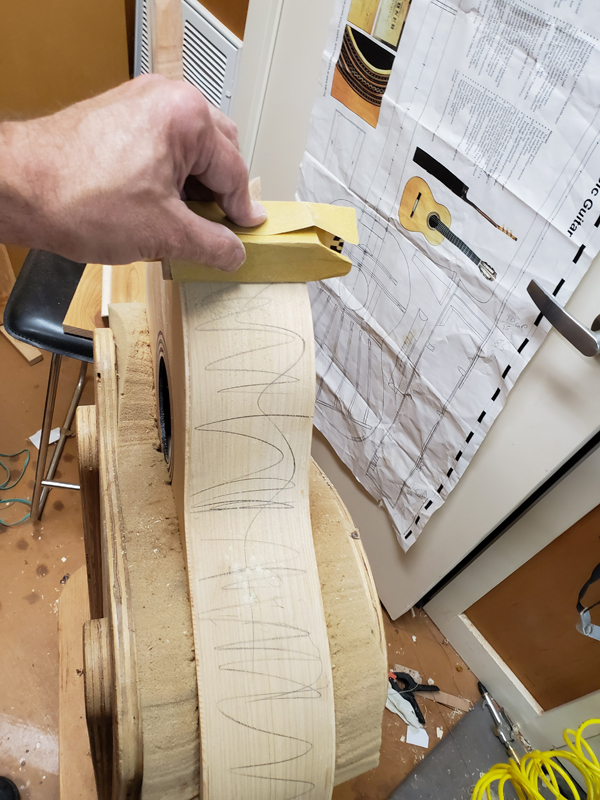
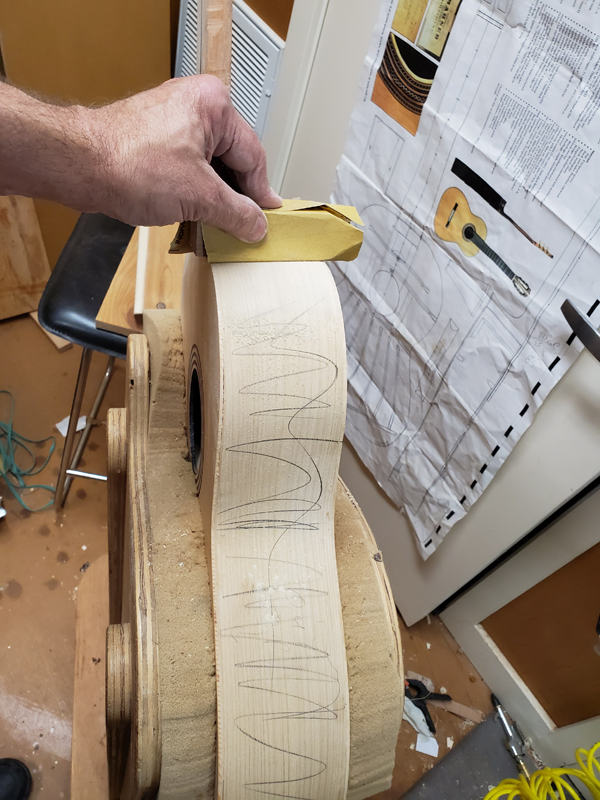
Trimming the top flush with the rims. I use a flush-trim bit in the router, then clean up with a sanding block.
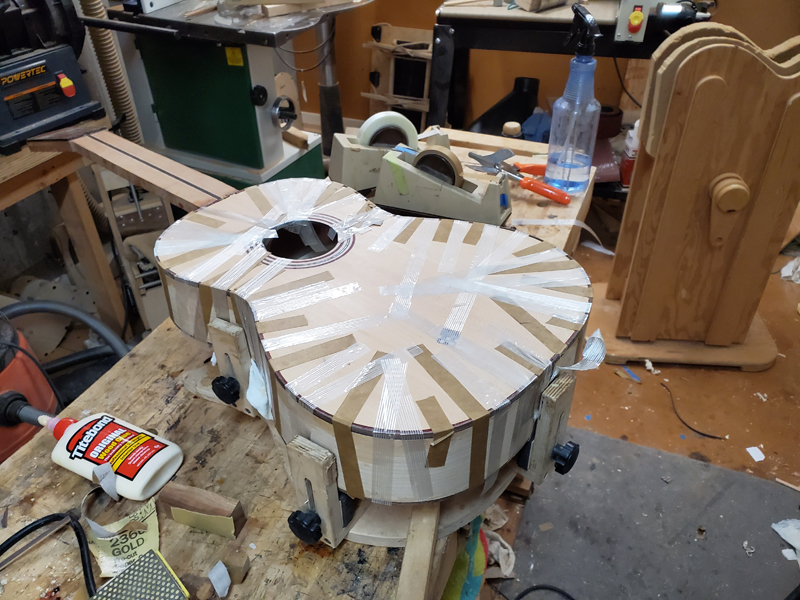
I fit the back to the guitar and cut out rebates for the back braces (sorry, no pictures) but look at one of my other builds as I’ve documented it before. Here I am ready to glue the back on. I spent some time cleaning up the inside with sandpaper and removed any glue with chisels and scrapers.
The back fit with little play, but I still spent time making sure the neck and tail were lined up correctly. The center strip in the back really shows off any misalignments. A few more tentellones on the back — these work well for the flamenco approach.
With the box closed, it’s time for bindings and purfling. Paco’s approach uses a purfling ledge cut with a Dremel. This was a nice technique — different from my usual method of routing a shelf for the bindings.
On Purfling LedgesAfter posting this, Dave mentioned a Czech maker named Jan Tulacek who doesn’t use binding at all — just thin purfling directly on the edge. Apparently that’s traditional for many European makers. Something to try on a future build.
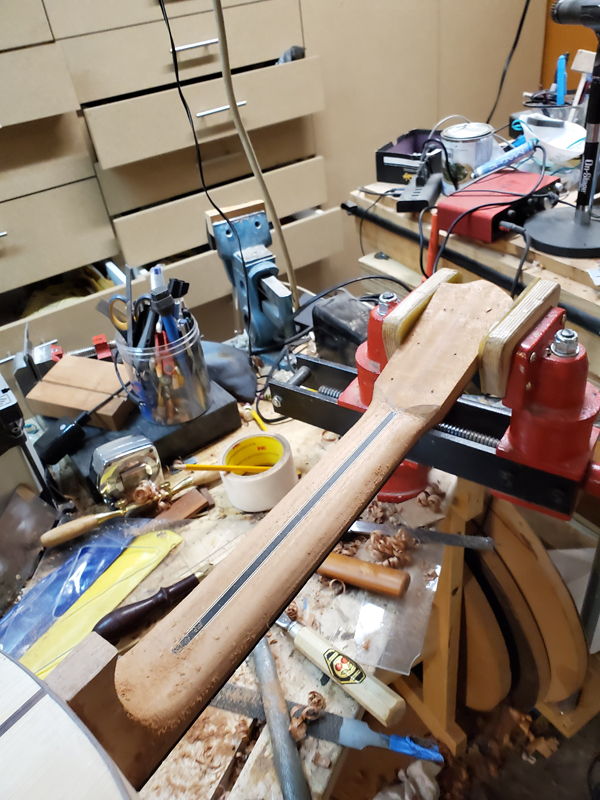
I spent a lot of time getting the purfling channels clean. This Spanish Cedar was a pain — it carved like butter in one direction but tore out in the other. Patience and sharp tools.
The bindings are Rocklite Sundari. I normally use real wood but wanted to try this engineered material. It bends easily and looks great.
Binding channels cleaned up and purfling glued in. Getting close to looking like a guitar now.
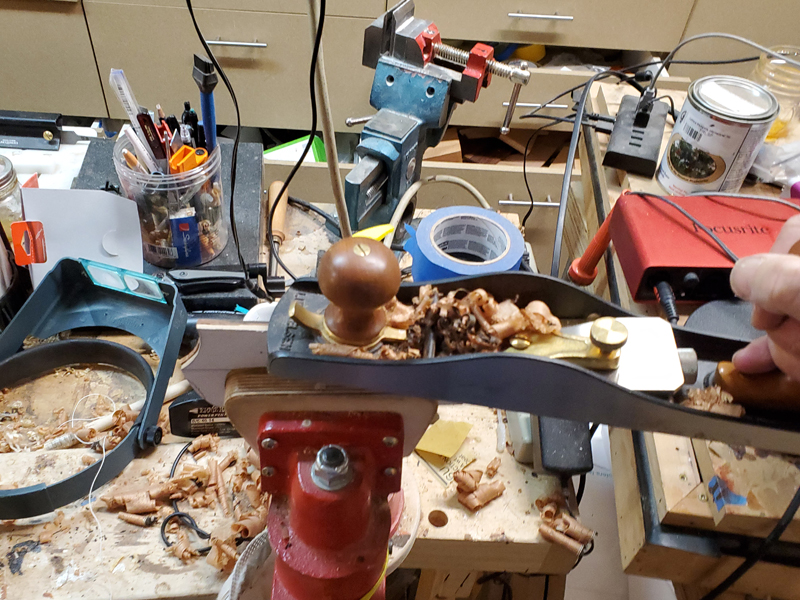
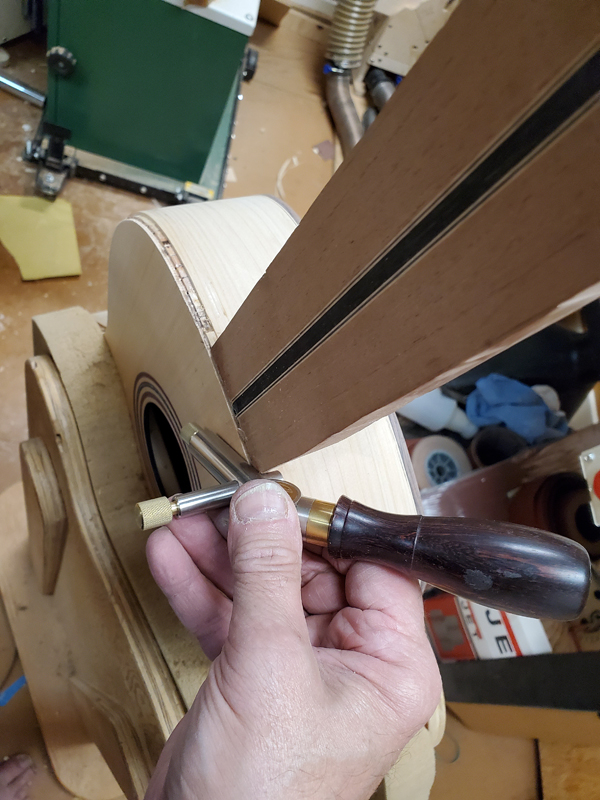
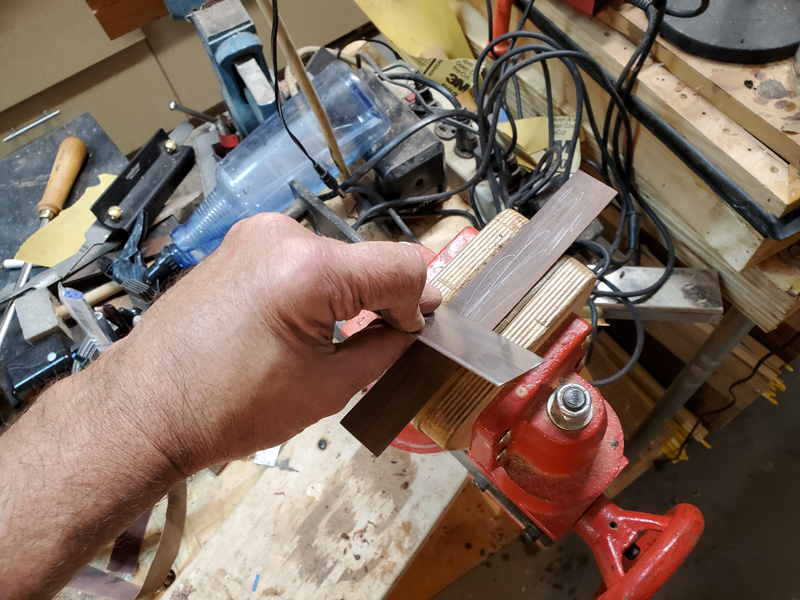
Scraping the bindings flush. This is slow, meditative work. A sharp cabinet scraper and good light.
Several people commented on the progress — thanks to Dave, Kevin, and the others following along. Dave asked about the approach to bindings without a ledge, and it got me thinking about different European traditions.
I could see how the lack of bindings on the back works. I have worked on old Martin guitars without bindings. I wonder if they are a bit more work, as the top and back joint needs to be really good. Generally I’m happy if they are glued on the linings, and often there is a gap between the rims and the top or back. With bindings it gets routed away.
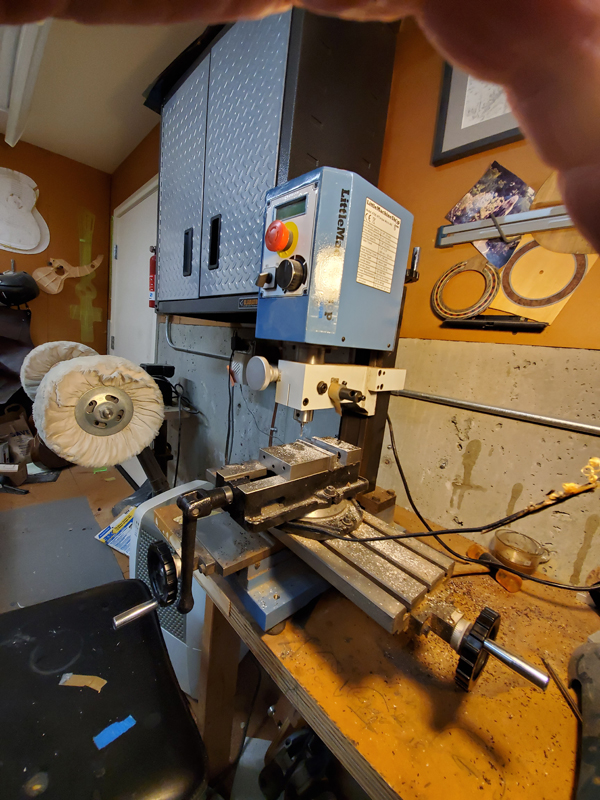
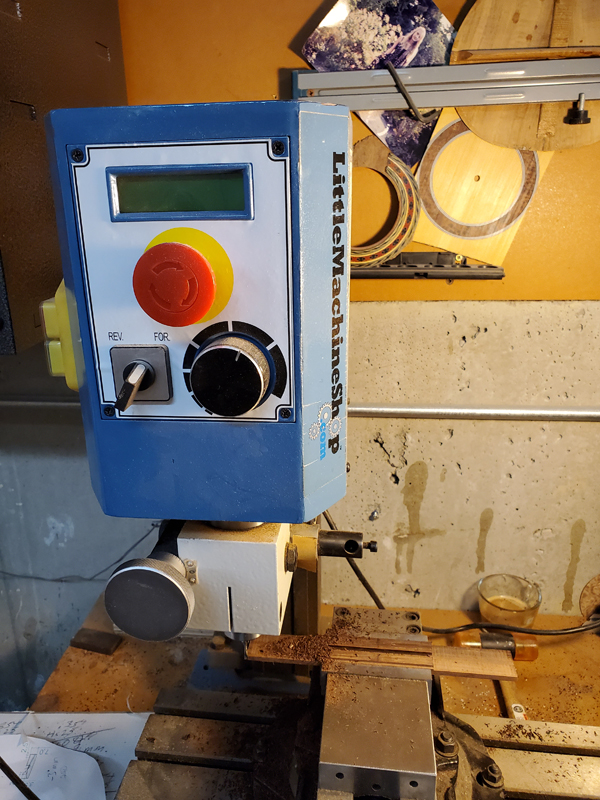
More progress on the flamenco. I used my Micro Mill to rough out a bridge.
I’ve been working with a 1/8" carbon fiber plate to laminate under the bridge. This adds tremendous strength without weight — the bridge will never pull up.
Carbon Fiber Bridge PlateCarbon fiber under the bridge is one of those modifications that costs almost nothing and adds real structural insurance. A thin CF laminate glued to the underside of the bridge distributes the string load and prevents the rocking motion that eventually pulls wooden bridges off the top.
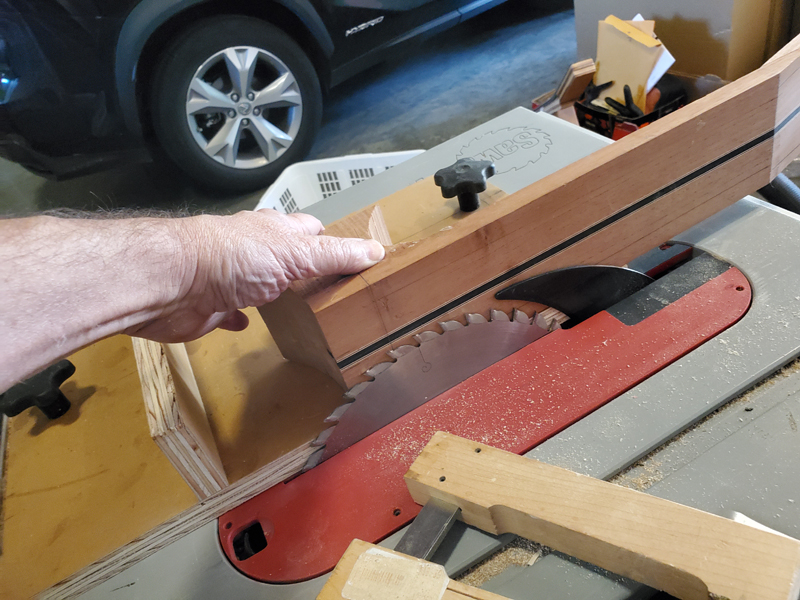
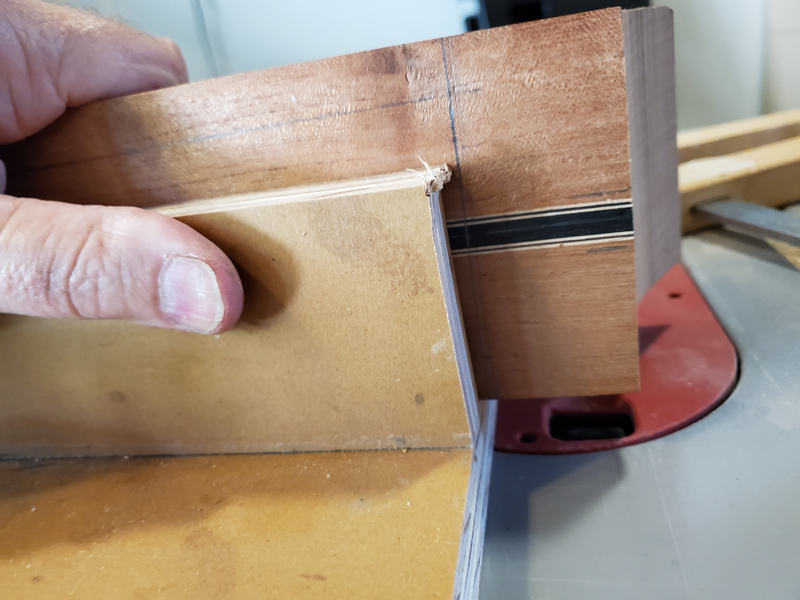
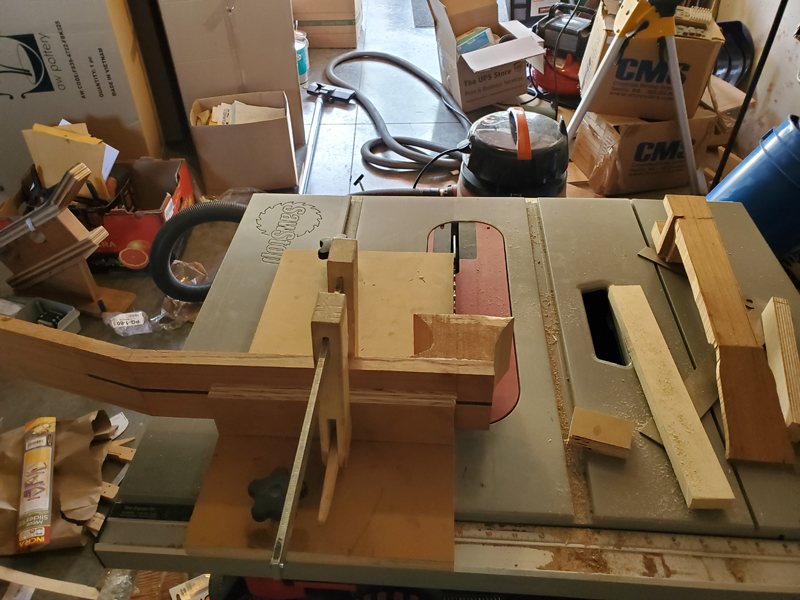
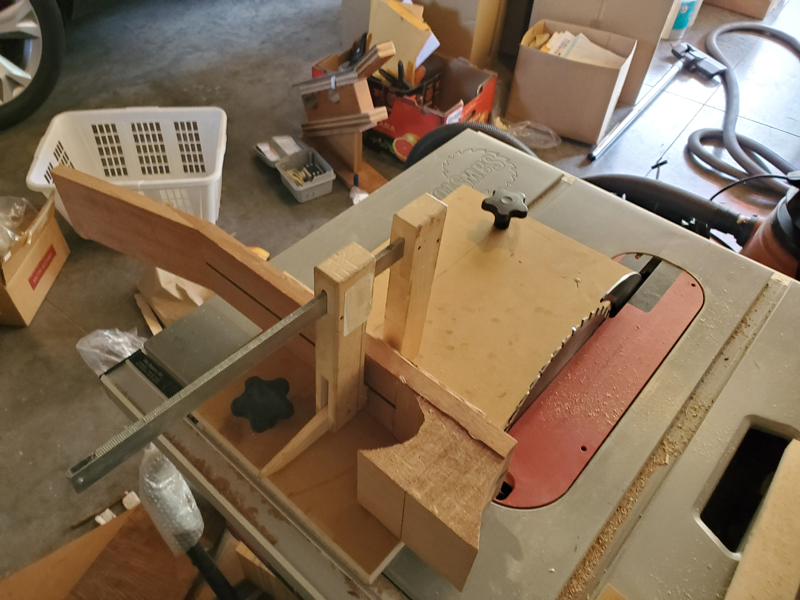
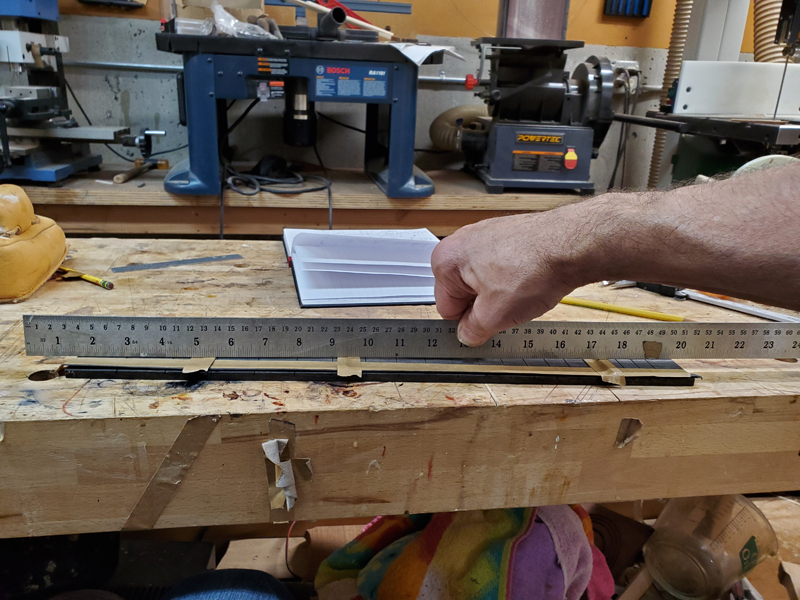
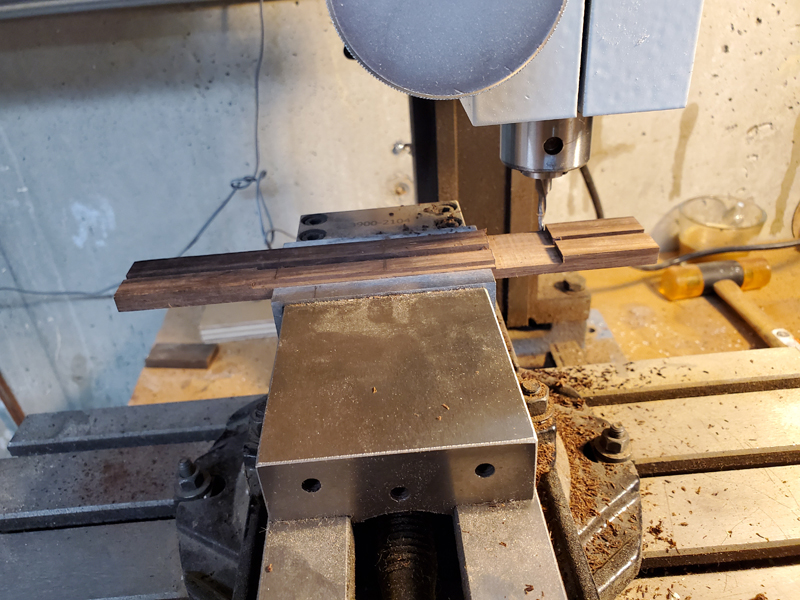
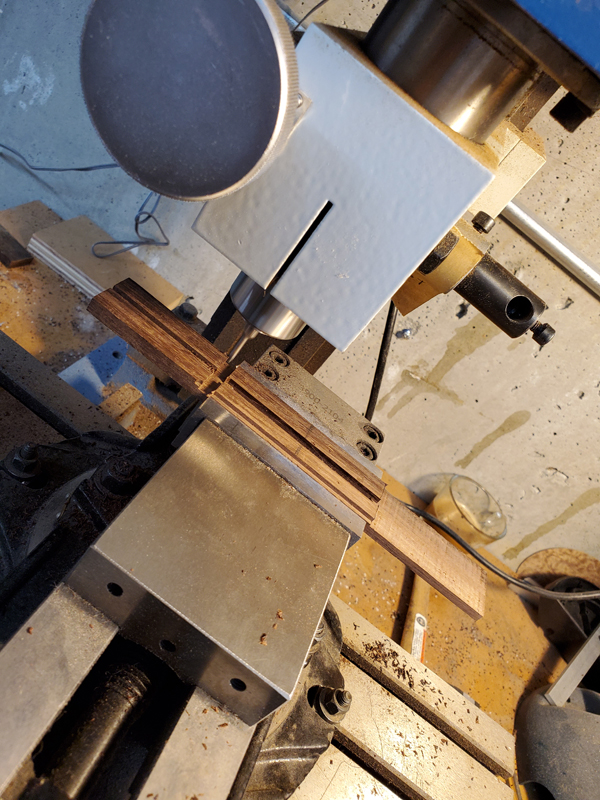
Cutting and fitting the fret slots. I use my table saw sled with a dedicated thin-kerf blade for this.
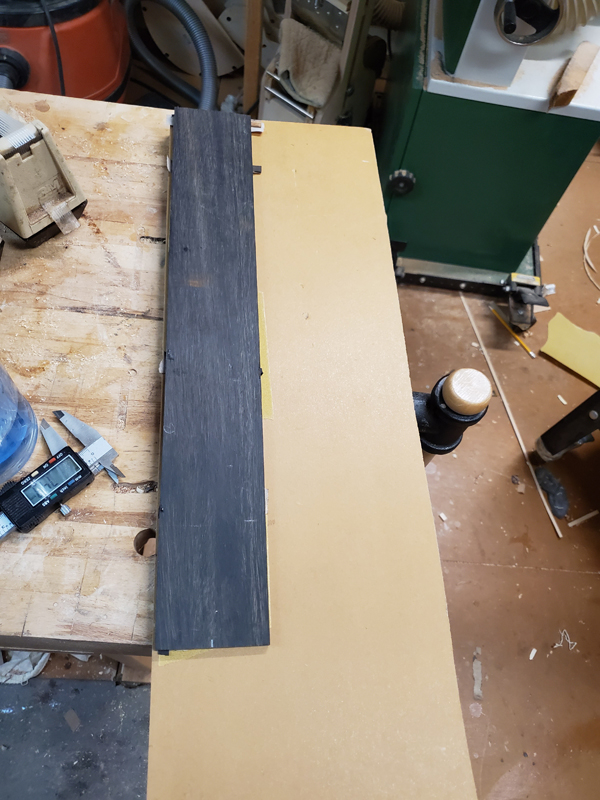
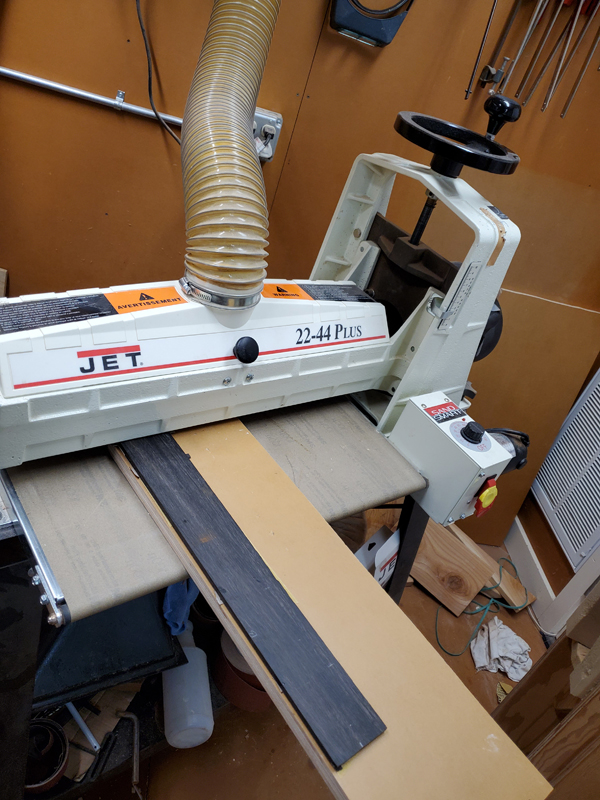
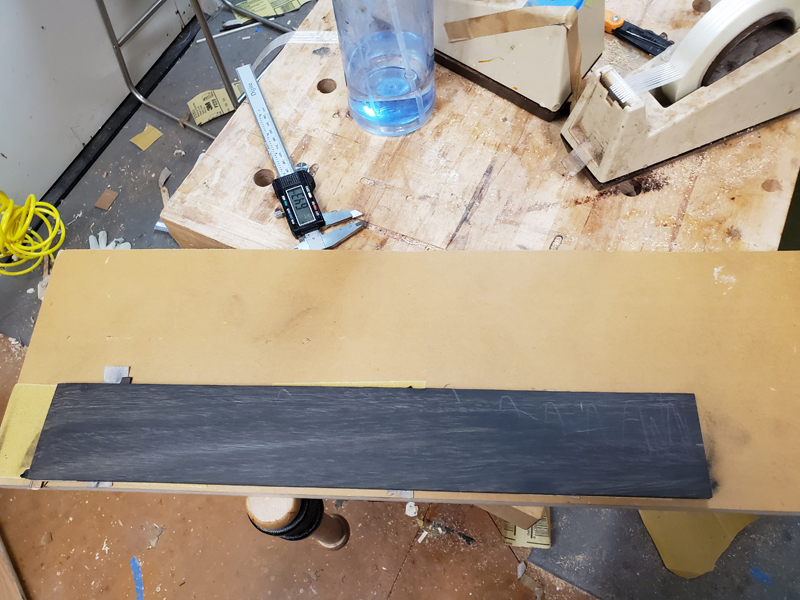
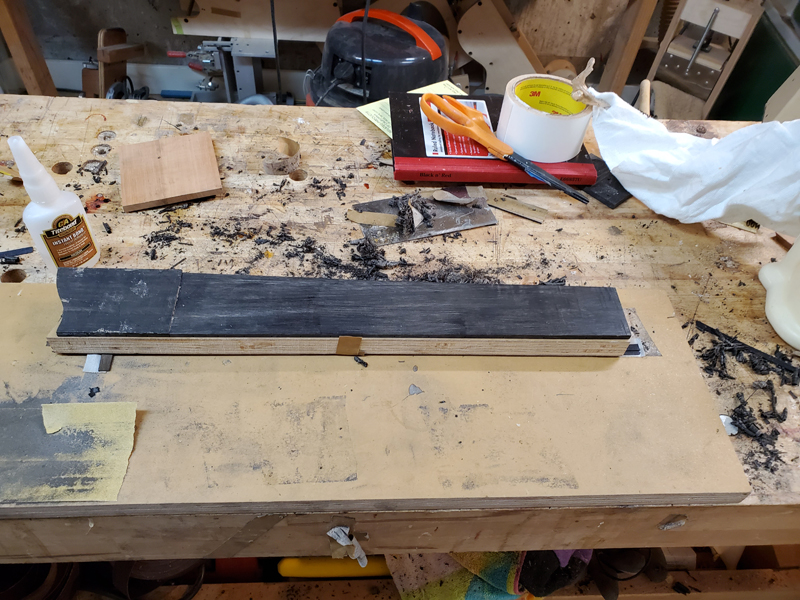
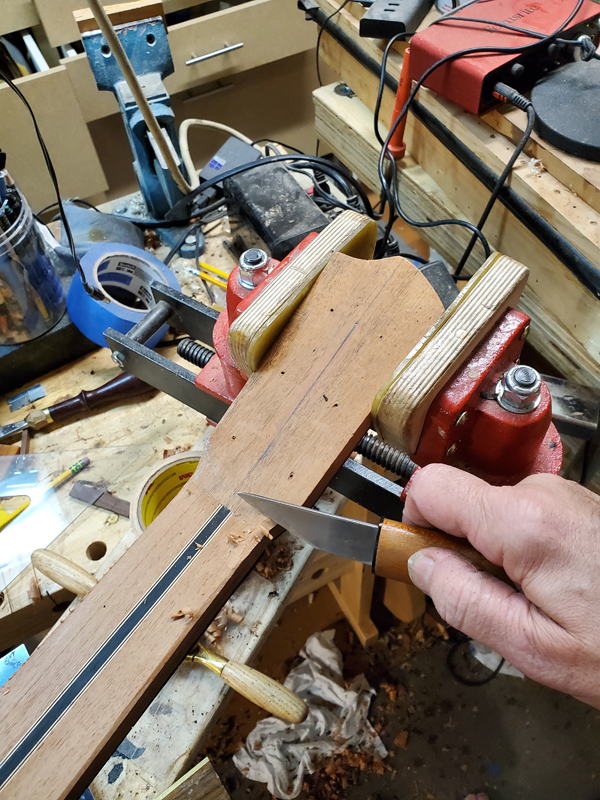
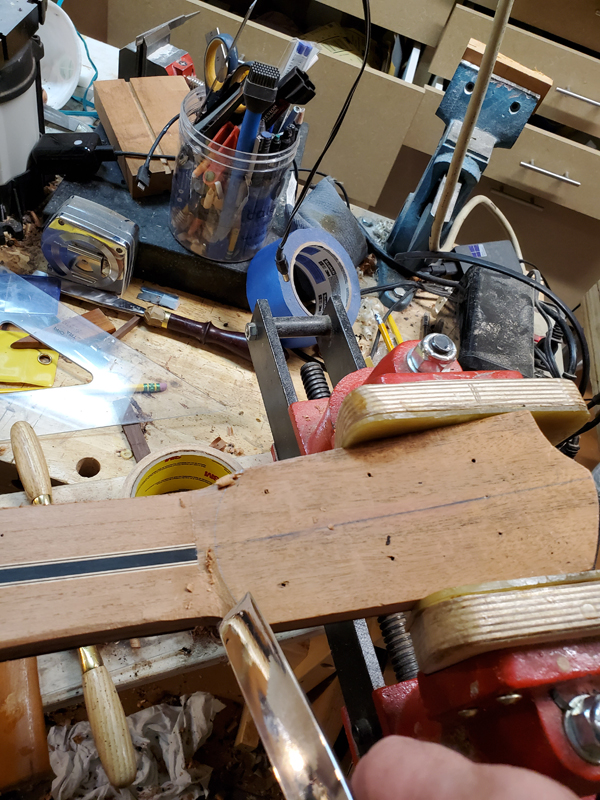
The neck was shaped and the fretboard was prepared. I use an ebony fretboard even on this flamenco — it’s what I had on hand and I prefer the feel.
Fitting the Wittner Finetune flamenco tuners. These are geared pegs that look traditional but have the precision of modern machines.
The headstock veneer is Brazilian Rosewood — a small offcut from another project. Even a tiny bit of Brazilian adds a touch of class.
Kevin asked how many instruments I’ve completed now — I’m in my mid-twenties. So far this is one of my cleaner projects. I’ll see if I can get it through finishing without dropping something on the top.
So far so good, ding-wise. The guitar is French polished with blond shellac. Before French polishing the back and sides I used Zpoxy as a pore filler. Spanish Cypress doesn’t technically need pore filling, but I used it for two reasons: I like the amber tone it gives, and it helps me see if I’m level or have small dings I need to fill.
French Polish PrepI applied a very thin coat of Zpoxy, taking most off with a plastic name-tag card, then sanded the guitar level with 400-grit paper. The key is to fill the grain without building up a thick layer. The blond shellac over the amber Zpoxy gives Spanish Cypress a warm, honey tone.
The French polish goes on in many thin sessions. It’s slow work but there’s nothing quite like a shellac finish on a classical or flamenco guitar — the way it lets the top breathe and respond.
Getting close now. The finish is building up nicely — even, warm, and clear.
I glued the bridge on, fretted the instrument, strung it up, and set it. I had a full mask on the bridge — I make the mask by locating the bridge on some tape, using a scalpel to score the tape, and removing the tape that isn’t the mask. Here I’m removing the tape after allowing the finish to cure for a few days.
I very lightly score along the bridge again to make sure I know where the finish line needs to be. Then I use a chisel to clean up any finish to the line and create a fresh glue surface.
Bridge TipWhen gluing a bridge, the finish must be completely removed from the glue surface. I score the outline first, then chisel away the French polish right to the line. Any shellac left under the bridge will eventually let go. Take the time to get this right.
Fretting the instrument. I use a fret press rather than a hammer for a more consistent seat. Especially on ebony one can come back and fill the slot ends afterwards.
The nut and saddle are bone. I shape the nut to keep the action as low as possible — flamenco players want the strings right on top of the frets for that percussive buzz.
And now with video! Paco Chorobo — a real flamenco player, not me — put the guitar through its paces. The response was everything I hoped for: bright, punchy, with that characteristic flamenco bark.
Specifications
StyleFlamenco Blanca
TopSitka Spruce
Back & SidesSpanish Cypress
NeckSpanish Cedar with Ebony Layup
FretboardEbony
Bridge & Peghead VeneerBrazilian Rosewood
BindingsRocklite Sundari
Back BackstripEast Indian Rosewood
TunersWittner Finetune Flamenco
FinishFrench Polish — Blond Shellac
Build PeriodJuly – August 2019